StudyTexter vs. other AI tools
When you compare StudyTexter with other AI tools, you quickly find two groups. First, generators for complete papers: you enter a few details, such as topic, length, outline, sources or style, and automatically receive a finished paper. That sounds convenient, but it is risky: the topic is often not handled accurately, sources and citations are frequently wrong, and typical AI mistakes are clearly visible. Without careful checking and major revision, papers like this often fail at university. Second, there are individual AI helpers such as ChatGPT, Gemini, Perplexity, Consensus, Elicit or NotebookLM. They help with research, summaries or wording, but you still have to connect, verify and turn everything into an academic paper yourself. StudyTexter combines the benefits of both worlds: guided, controllable, source-based and built so heavy revision is not needed afterwards.
Many AI tools look similar at first: enter a topic, get text, done. But that is exactly where the difference starts. An academic paper is not a single block of text. It needs relevant sources, verifiable citations, a logical structure, clear chapter goals, a coherent argument, appropriate style, tables, figures and quality control.
A chatbot can help with wording. A research tool can help you discover studies. NotebookLM can summarize sources. A one-click generator can produce a quick draft. But none of these tools automatically guides you through the complete academic process.
Before comparing StudyTexter with other tools, it helps to separate the market clearly. Otherwise, you end up comparing a complete academic workflow with a chat window or a quick text generator.
One-click tools look attractive at first. You enter a topic, length, subject and maybe a few notes. A few minutes later, you receive a complete paper. For brainstorming, rough ideas or a first look at possible chapters, that can be useful. For an actual university submission, this approach is usually too weak.
Even the strongest tools in this category have the same basic limitation: if a complete academic paper is generated in minutes from very little input, the steps that create academic quality are missing. Be especially careful with sites that do not show a clear product, real examples, transparent ownership or a verifiable source logic.
The second group is often much more serious: tools that handle one specific task well. These tools can be helpful if you know exactly what you are using them for and how to verify the results.
| Task | Examples | Strength | Limit |
|---|---|---|---|
| Finding literature | Perplexity, Consensus, Elicit, Semantic Scholar, ResearchRabbit, Litmaps | Helps you discover studies, source ideas and research directions faster. | You still have to judge relevance, method, credibility and fit yourself. |
| Summarizing sources | NotebookLM, ChatGPT with uploads, Claude | Useful for structuring PDFs and understanding key claims. | A summary does not replace source verification or page-number checks. |
| Writing and wording | ChatGPT, Gemini, Claude, DeepL Write | Strong for style, rewrites, examples and ideas. | These tools do not automatically understand your whole paper or build a coherent argument. |
| Managing references | Zotero, Citavi, Mendeley | Very useful for your library, citations and bibliography. | They do not write or evaluate the academic argument for you. |
Normal AI tools usually deliver text, source ideas or individual answers. StudyTexter builds your academic paper as a process. That is the decisive difference: the paper is not generated from one prompt, but developed through several controllable steps. You steer topic, direction, sources and chapter goals before the final text, so you do not have to repair the wrong AI paper afterwards.
You define topic, course, length, style, language, citation style and desired direction.
You add assignment files, sources, data or materials. StudyTexter searches for and processes relevant literature.
Sources are made visible, sorted and checked. You can decide what should be used.
Research question, method, outline and chapter goals are clarified before the full text is written.
Coherent chapters are built from confirmed sources, structure and content decisions.
If needed, tables, figures, visualizations and empirical analysis sections can be prepared.
Argument, sources, citations, originality, AI detection and formatting become easier to review.
You receive the full text, bibliography, reports and bonus downloads in one package.
The differences become clear when you look not only at speed, but also at academic quality, sources, control and revision work.
| Criterion | One-click generator | Individual AI helpers | StudyTexter |
|---|---|---|---|
| Effort | Very low at first, then usually heavy repair work. | Medium to high effort because you coordinate everything yourself. | Lower effort because the workflow guides you step by step. |
| Control | Too little control: topic, direction and chapter goals are hard to steer. | High control only if you already know how to manage the process. | High control through requirements, uploads, source review, structure and content checks. |
| Sources & citations | High risk: wrong sources, unclear pages, decorative or invented citations. | Depends on how carefully you verify sources manually. | Sources are processed, checked and connected with citations and page references. |
| Coherence | Often shallow, repetitive, jumpy or off-topic. | Can be good, but you must connect chapters yourself. | Chapters are built from one structure, research question, evidence base and chapter goals. |
| Quality | Useful for ideas, but too weak as a university paper and often recognizable as AI work. | Good for individual tasks, weak as a complete process. | Specialized for academic writing: research, structure, text, citations, export and checks. |
| Revision work | Heavy revision required, otherwise the failure risk is high. | Lots of stitching, checking and rewriting required. | No heavy repair work to rescue the topic, because you steer the paper before it is written. |
A fair comparison should not claim that every other tool is useless. Many tools are useful when you use them for the right job. The real question is: do you want to speed up isolated tasks, or do you need one system for the whole academic paper?
The biggest weakness of many AI tools is not style. The style often sounds good. The real risk is sources, citations and evidence. An academic paper must not only sound convincing. Every central claim needs to be backed by real literature.
StudyTexter is stronger than a collection of prompts because the paper becomes visible inside the product. You do not only see the final text. You also see planning, sources, chapters, quality reports and additional materials.
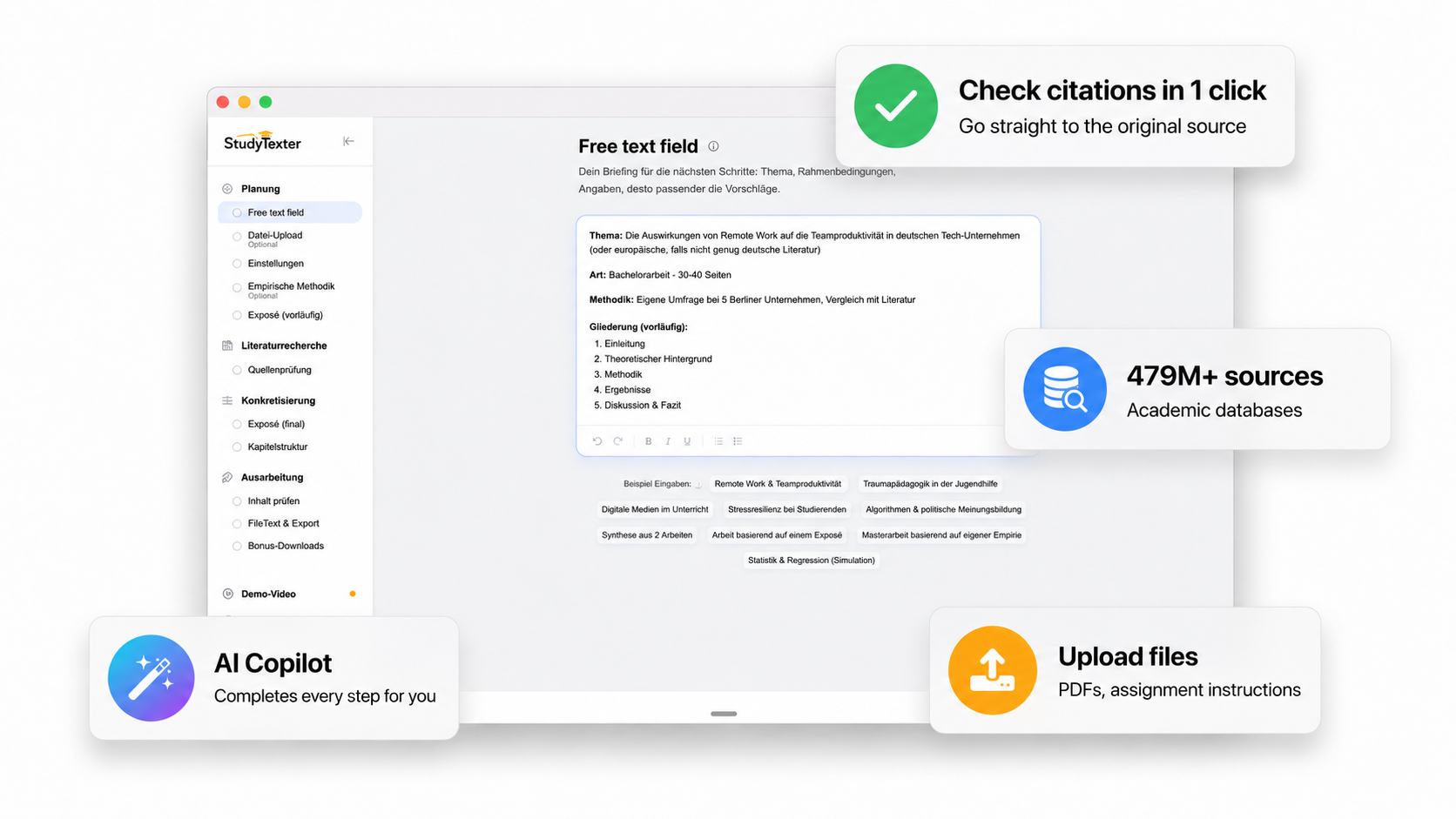
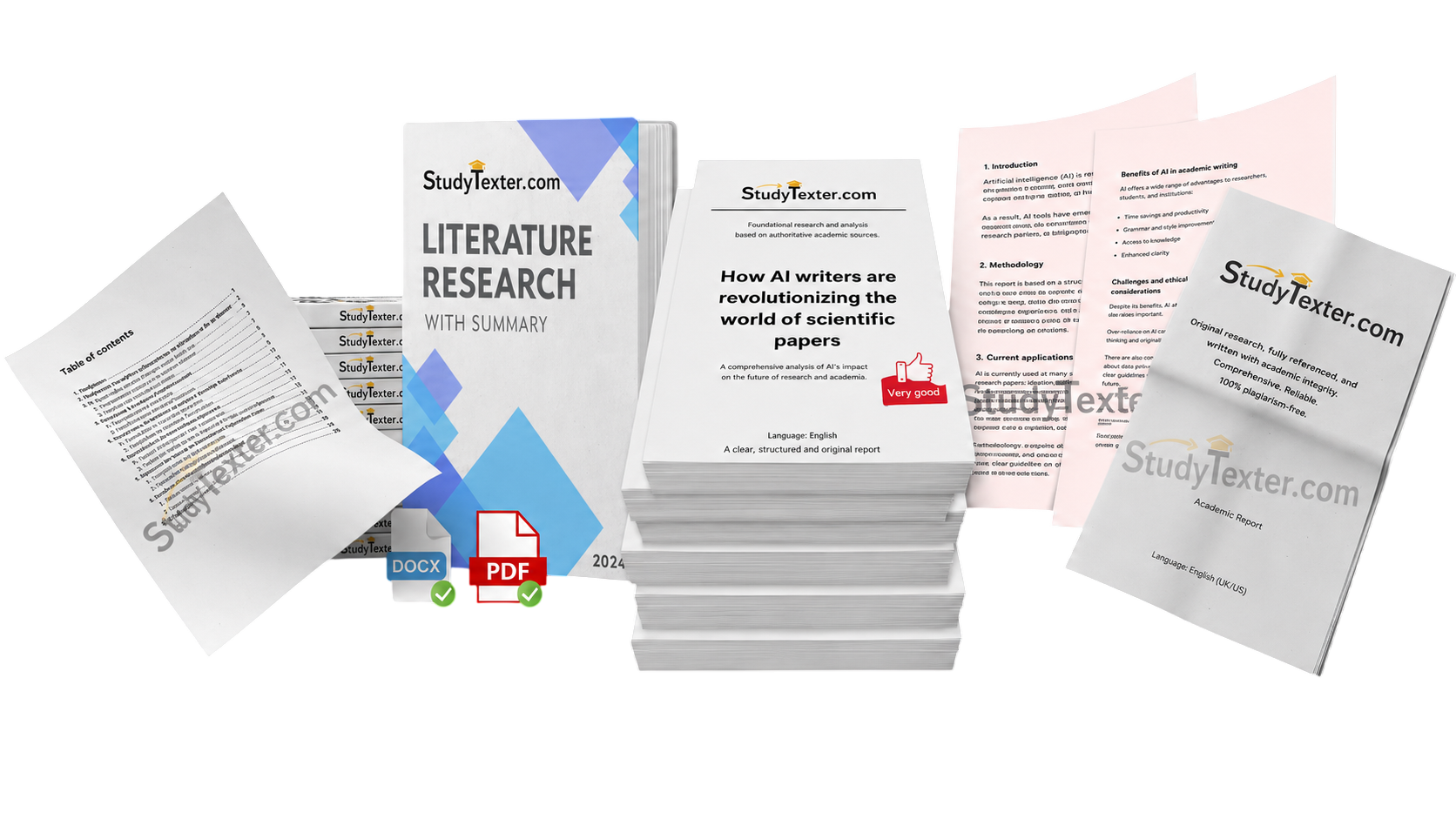
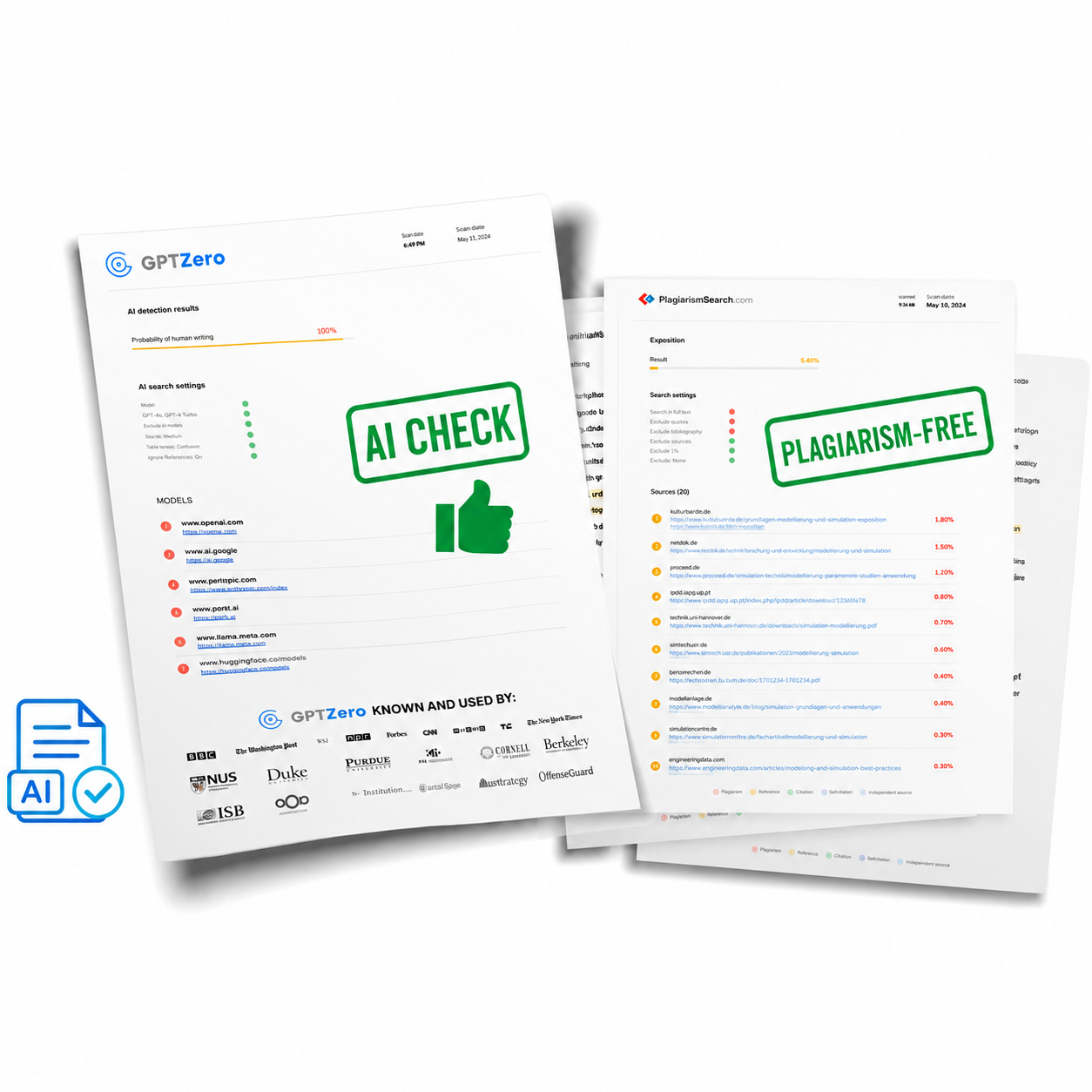
One-click generators are fast, but too uncontrolled. Individual AI helpers are useful, but fragmented. StudyTexter is stronger because it treats academic writing as a process: clarify the topic, collect sources, review sources, develop the proposal, build the structure, write chapters, prepare citations, check quality and export the final package.
If you only need a few ideas, ChatGPT, Perplexity, Consensus, Elicit or NotebookLM may be enough. But if you need a complete academic paper that fits your topic, requirements, course and style, a guided workflow is much more useful.
Start with your topic, upload your requirements and move step by step through research, source review, structure, chapters, export and quality reports.
It depends on what you need. For individual tasks, ChatGPT, Gemini, Claude, Perplexity, Consensus, Elicit, NotebookLM, Zotero or DeepL Write can be useful. For a complete academic paper, StudyTexter is stronger because it combines research, source review, structure, full text, citations, export and quality reports in one guided workflow.
For isolated wording tasks, ChatGPT can be helpful. For a full academic paper, StudyTexter is better suited because it does not only generate text. It guides you through topic, uploads, settings, source review, proposal, chapter structure, content checks, export and quality reports.
One-click generators create a full text from very little input. That is convenient, but often leads to shallow results, wrong sources, repetition, weak control and recognizable AI patterns. StudyTexter builds the paper step by step so that topic, requirements, sources and style fit before the final text is written.
StudyTexter is designed to avoid heavy repair work because you steer the paper before it is written: topic, sources, structure, chapter goals and content are reviewed in the workflow. A final check of your university requirements, sources and personal style is still useful.
For research and source ideas, Perplexity, Consensus, Elicit, Semantic Scholar, ResearchRabbit and Litmaps are useful. For source work, NotebookLM can help. For writing and wording, ChatGPT, Gemini, Claude, DeepL Write and Grammarly are useful. For reference management, Zotero, Citavi or Mendeley can help.
