AI paper writer · Academic-grade
Most “free AI paper writers” are essay-generators with fake citations. StudyTexter is the AI paper writer that universities actually accept: real DOI bibliography, your supervisor's reference style (APA, MLA, Chicago, Harvard, IEEE), originality + AI-detection report at export, and an audit trail you can hand to your supervisor.
 Free to startDrafted in 2 hours
Most AI paper writers in the top of Google look academic but fail the moment a supervisor opens the bibliography. Here is what they get wrong:
Four steps from blank page to a full first draft you can hand to your supervisor.
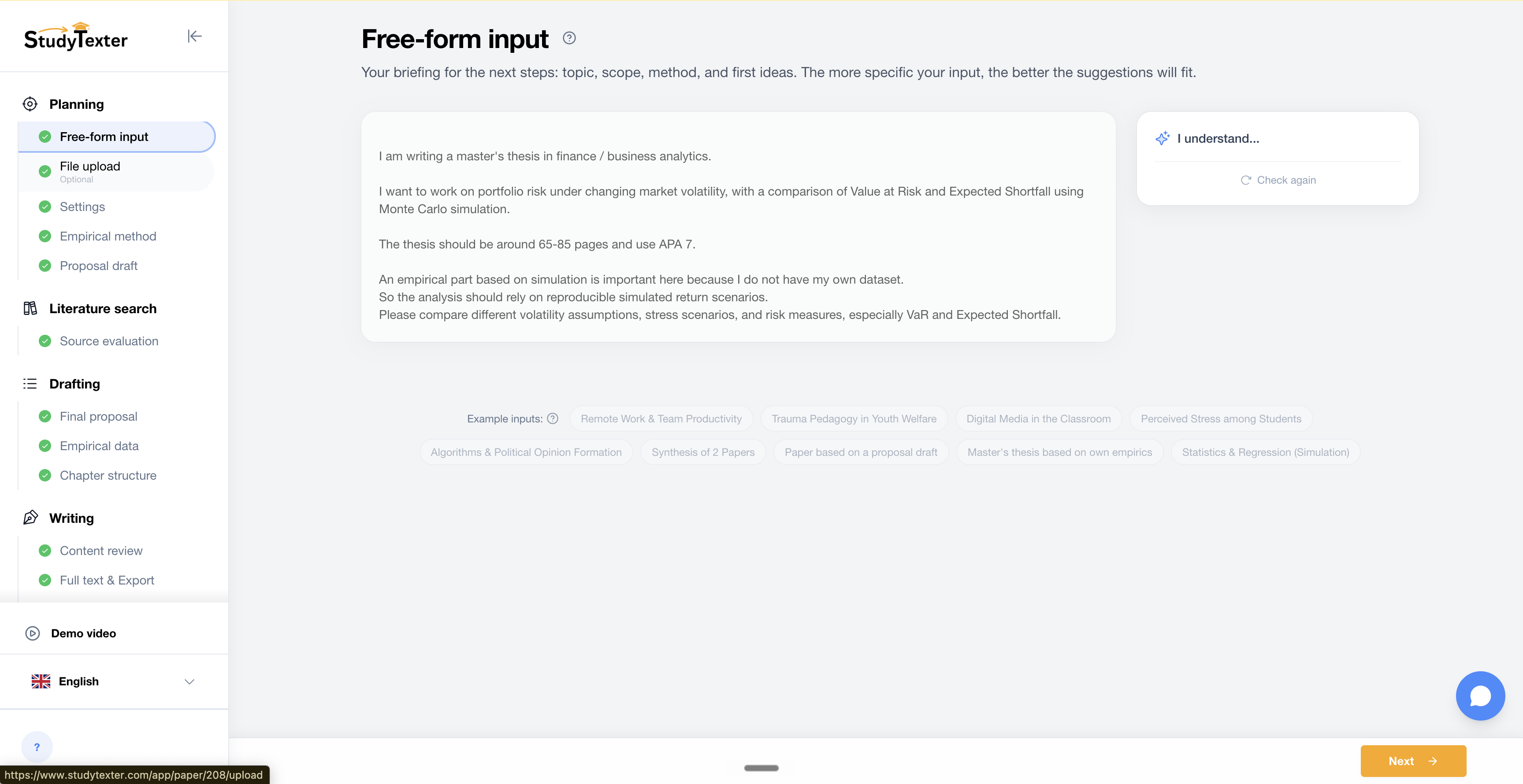
Title, research question, target word count, paper type (research paper, term paper, scientific report, capstone, lit review), required reference style. Upload any sources you must cite.
The editor proposes a section-by-section outline with the literature gap, methodology, and the contribution. You approve, swap sections, or rewrite the research question — nothing is locked.
The editor drafts each section against the outline, pulling real DOI sources, weaving citations in your reference style, and showing you the source for every claim inline.
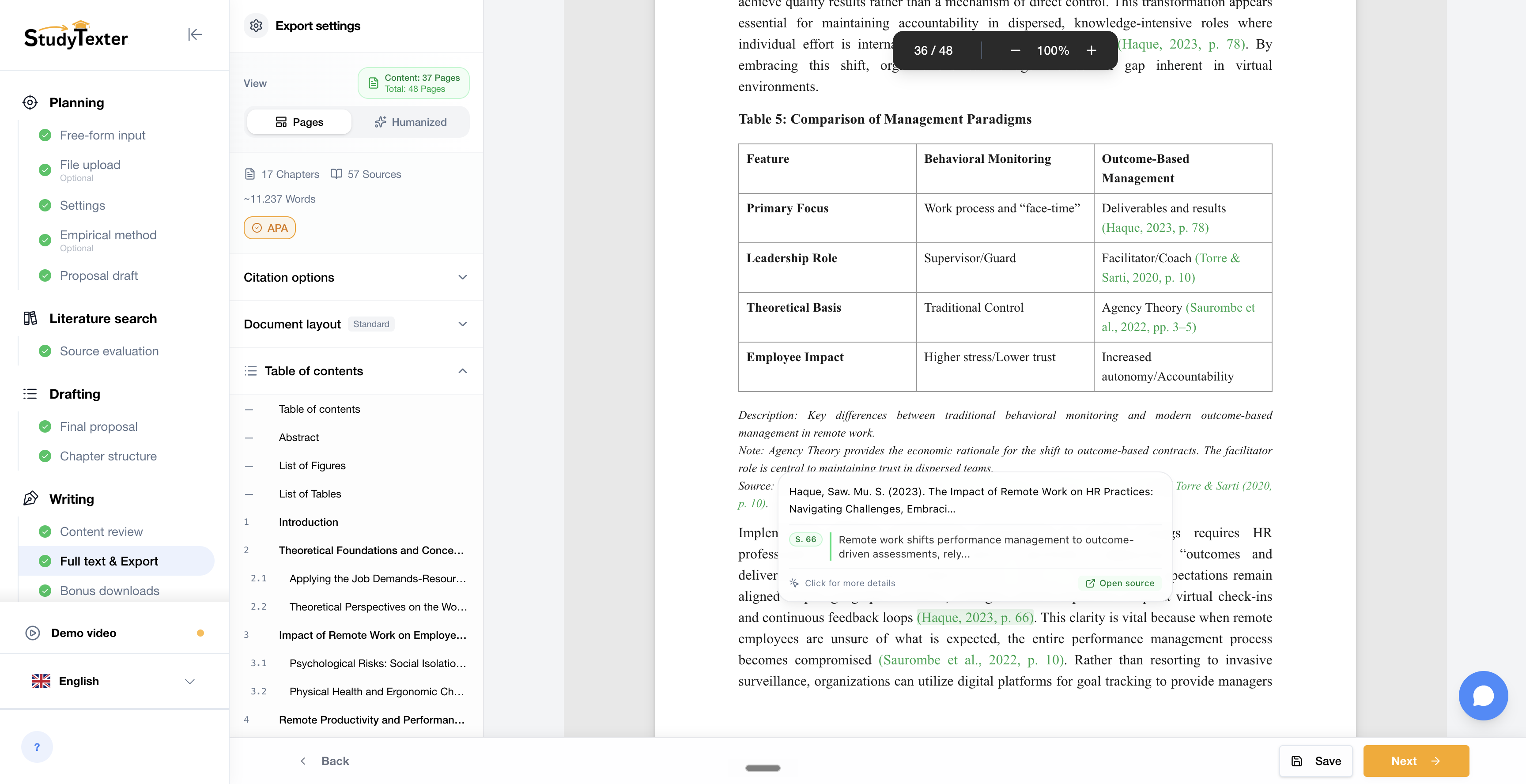
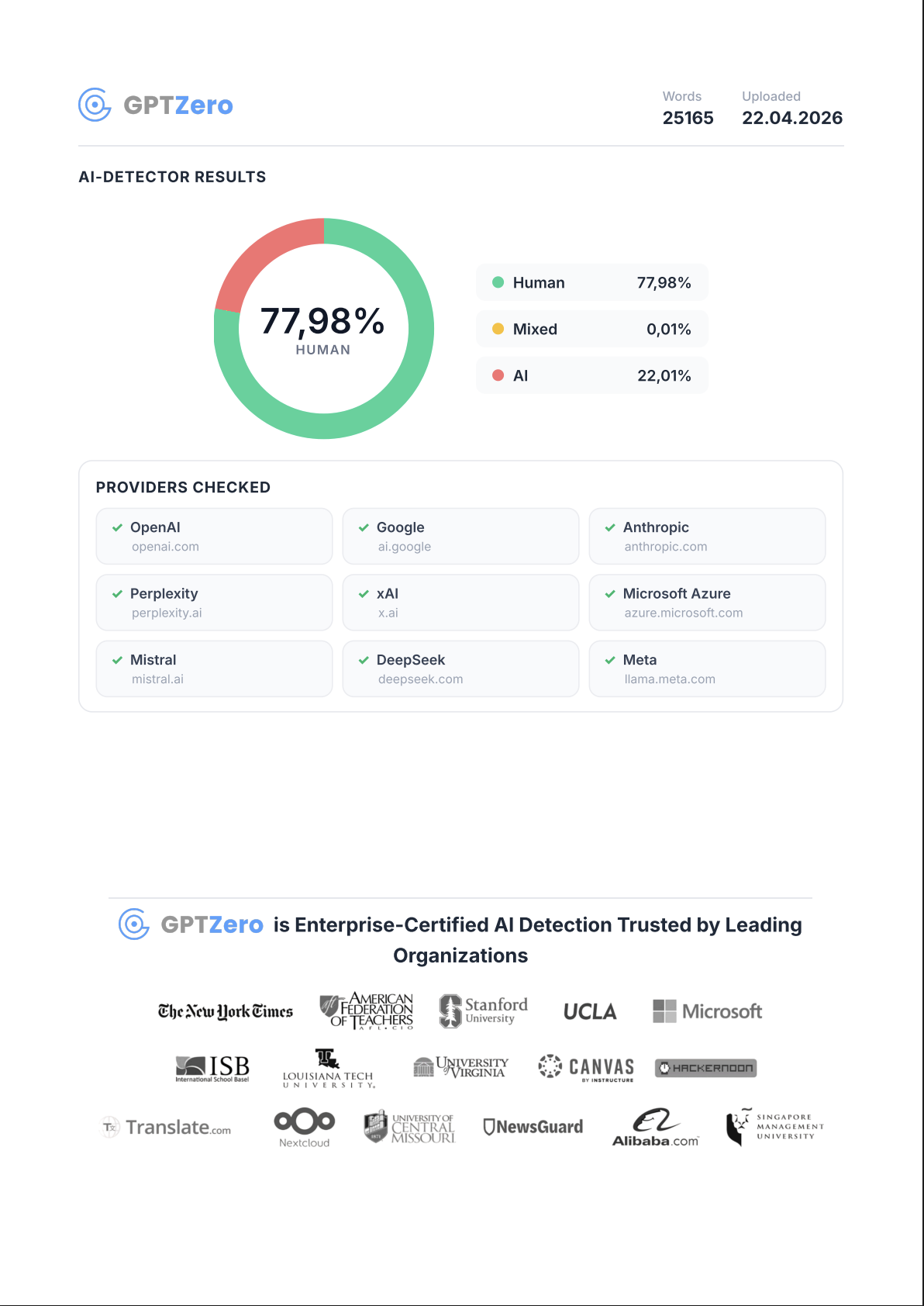
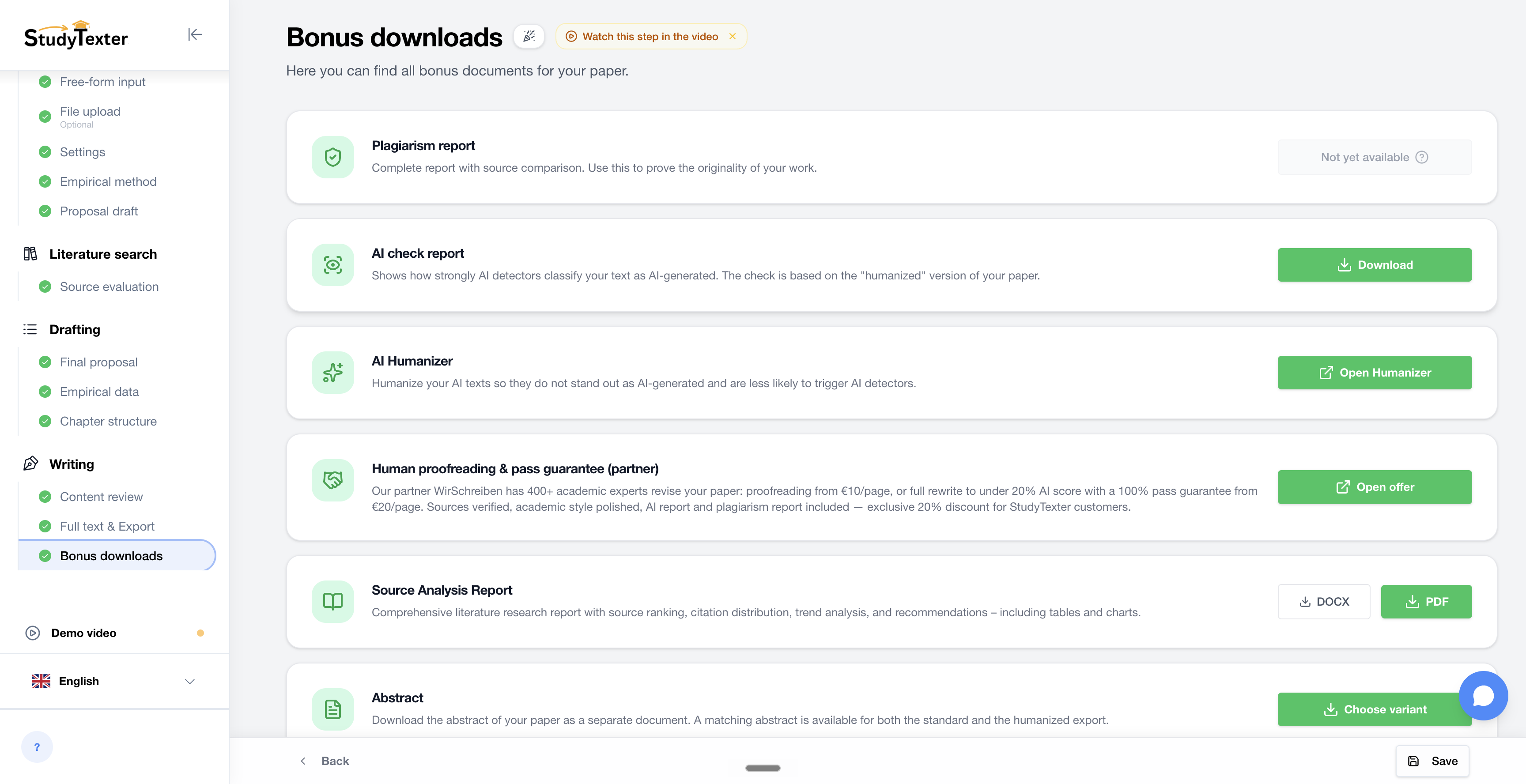
Before you export, the editor runs the paper through originality + AI-detection and shows the scores. Export DOCX, PDF, or LaTeX with the bibliography in your supervisor's preferred style.
What sets an academic-grade AI paper writer apart from the free essay-generators in the top of Google.
| Capability | Free AI writers (ChatGPT, free generators) | StudyTexter (academic-grade) |
|---|---|---|
| Citations | Hallucinated DOIs, invented authors | Real DOI bibliography, verified sources |
| Reference styles | MLA default, ad-hoc formatting | APA 7, MLA 9, Chicago, Harvard, IEEE |
| Section depth | 5-paragraph essay shape | Outline → literature gap → methodology → contribution |
| Originality report | Not included | Originality + AI-detection at export |
| Source upload | Not supported | Upload your sources — editor weaves them in |
| Audit trail | None | Versioned brief, outline, draft history |
| Cost | Free until paywall | From $39 — see write my paper for the full pricing |
Every reference comes from a live DOI lookup against Crossref, PubMed, and IEEE Xplore. You can click each citation and open the source. Bibliography exports as BibTeX, RIS, or in-text — ready for Zotero, EndNote, or Mendeley.
Before you ship, the editor runs Turnitin-style originality plus modern AI-detection. You see the scores; if anything is flagged, the editor rewrites the offending passage and re-checks. No surprises at submission.
Every brief, outline, source, draft, and edit is timestamped. When your university asks you to declare AI use (UCL, Stanford, Oxford, Bocconi, Bologna already do), the audit-trail is the disclosure.
Free to start — brief, outline, and the first 2 sections. Pay $39 only when you export the finished paper with real DOI citations and an originality report.
Academic paper conventions vary by country. The editor matches the right one automatically.
Brief, outline, and the first draft of a research paper are free. You only pay when you export the final paper.
Compared to $1,500–$3,000 for a ghostwritten paper or 40 hours of your own time, $39 for a finished paper in 2 hours is the rational choice.
An AI tool that drafts an academic paper end-to-end — from research question and outline through full sections with citations to a finished bibliography. The good ones (StudyTexter, paperpal, jenni) use real DOI sources and originality-check the output. The free ones (most of the top SERP results) hallucinate citations and produce 5-paragraph essays.
Free to start: you can brief the paper, generate the outline, draft the first two sections, and run an originality preview without paying. You only pay when you export the final paper (from $39 for an 8–20 page paper). See write my paper for the full pricing table.
Real, verifiable DOI citations — pulled live from Crossref, PubMed, and IEEE Xplore. Every reference can be clicked and opened. This is the single biggest difference between StudyTexter and ChatGPT or free AI essay generators.
APA 7, MLA 9, Chicago (author-date and notes-bibliography), Harvard, IEEE, Vancouver, AGLC4 (Australian law), and McGill (Canadian law). Pick the one your supervisor requires; bibliography re-renders automatically.
Yes. Upload PDFs, links, or DOIs. The editor adds them to the source pool and weaves them into the draft with citations. You can also mark sources as “must cite” so they appear in specific sections.
The editor runs originality and AI-detection before you export, with Turnitin-equivalent fingerprinting. Anything flagged is rewritten and re-checked in the editor. Both reports export as PDF you can attach to your submission.
Five minutes to brief, ten minutes to approve the outline, sixty to ninety minutes for the AI to draft each section. Most 8–20 page papers go from blank page to a full first draft in under 2 hours. Edits and final review add another hour.
All of the above. Pick the paper type at brief-time and the editor uses the right outline (research paper → abstract / intro / lit review / methodology / results / discussion; term paper → intro / argument / evidence / counter-argument / conclusion; scientific report → IMRaD).
Yes — see literature review ai for the dedicated lit-review workflow with 30–60 source synthesis and gap-finding.
AI assistance with declared use is now permitted at most major universities (UCL, Stanford, Oxford, Bocconi, Bologna have explicit policies). The audit-trail StudyTexter generates supports the disclosure. Always check your specific course or department policy before submission.
StudyTexter is end-to-end: brief → outline → sections → bibliography → originality + AI-detection report at export. Paperpal is primarily a paraphrasing and language-polishing tool that adds citations. Jenni is an autocomplete-style writing assistant. If you want the AI to draft the whole paper for you, StudyTexter does that; if you want a co-pilot that helps you write, paperpal or jenni fit better. For source discovery + writing combined, see AI research assistant. For citation-only work, see AI citation generator.
Yes — the editor drafts in German, Spanish, French, Italian, Polish, Portuguese, and English. Reference styles localise (e.g. AGLC4 for AU law, McGill for CA law). German-language users may prefer KI für Hausarbeiten.
