Literature review AI · Source synthesis
Most literature review AI tools (Litmaps, ResearchRabbit, SciSpace) help you find sources. StudyTexter takes the next step: it synthesises 30–60 peer-reviewed sources into a chapter-ready review, ending with the research gap your dissertation or thesis fills. Real DOI bibliography, your supervisor's reference style, originality + AI-detection report.
 Free preview30–60 sources
Most AI tools in the top of “literature review ai” Google results are source-discovery tools, not synthesis tools. Here is the gap:
Four steps from research question to a chapter-ready literature review.
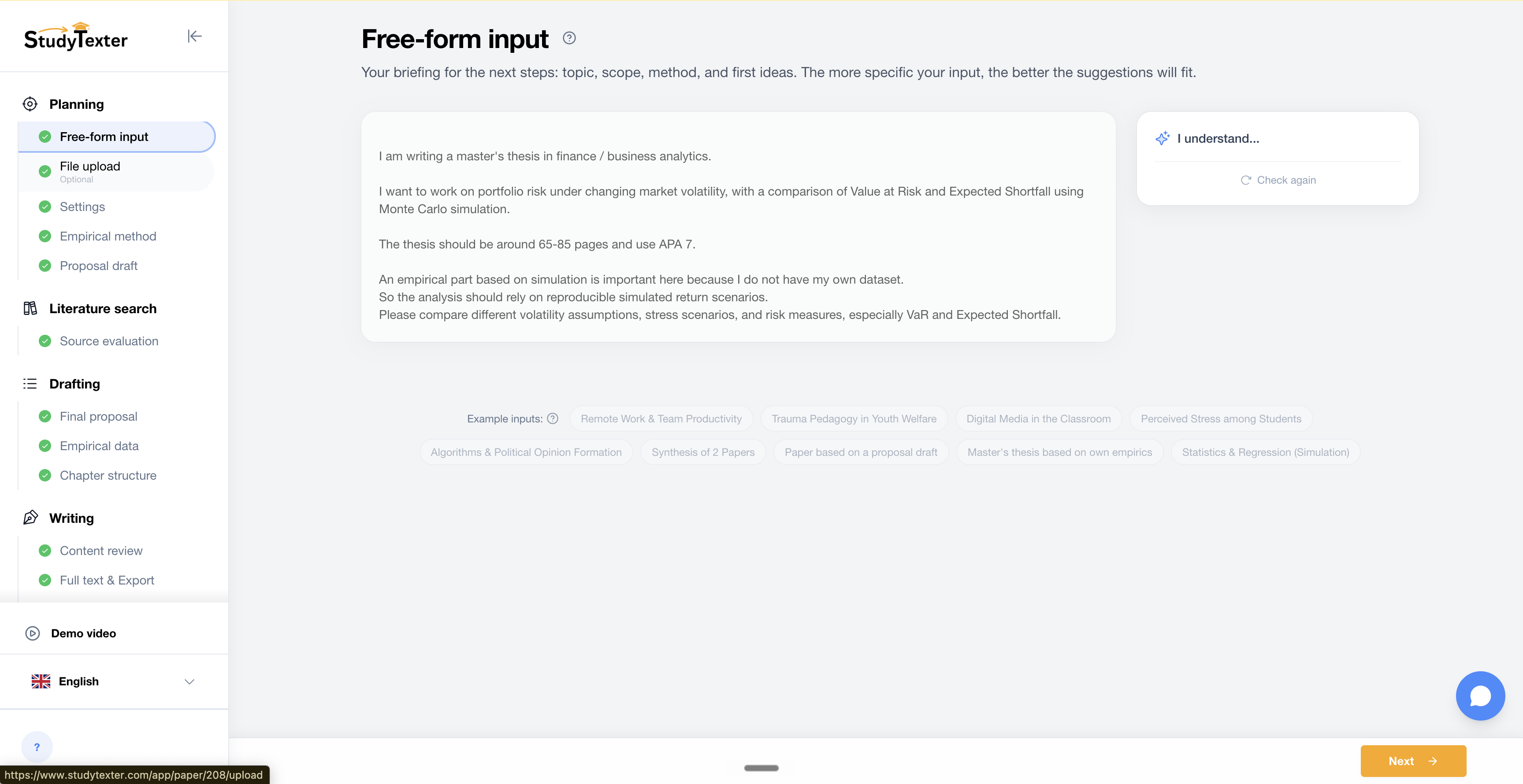
Your research question with explicit scope (population, time period, mechanism). Required source count (30–60 typical for a Master's, 60–120 for a PhD), date range, language, and the reference style your supervisor requires.
The editor proposes 60–120 candidate sources from Crossref, PubMed, IEEE Xplore, and Google Scholar. You approve, swap, or upload your own PDFs. Every source has the full DOI, abstract, and recency check.
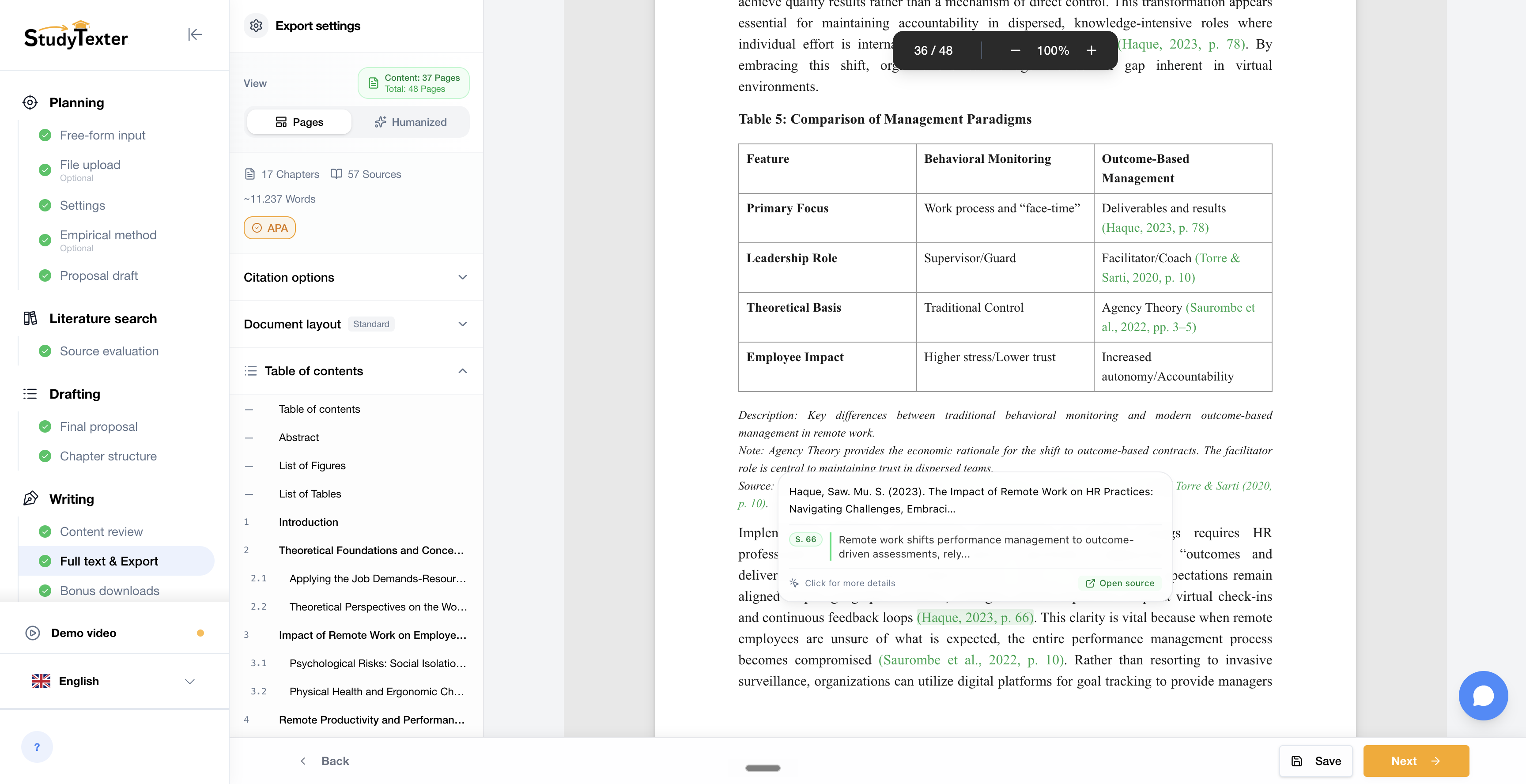
The editor organises sources by theme (not date), drafts the review section by section, weaves citations in your reference style, and shows the source for every claim inline. You see the synthesis structure before any prose is written.
The editor identifies the research gap the literature has not yet addressed — the gap your dissertation fills. Originality + AI-detection report ships with the export.
What separates a source-discovery tool from a literature-review-writing tool.
| Capability | Discovery tools (Litmaps, ResearchRabbit, SciSpace) | StudyTexter (synthesis + draft) |
|---|---|---|
| Primary output | Citation network / source map | Chapter-ready prose literature review |
| Source discovery | Yes, citation-graph based | Yes, semantic + citation-graph |
| Source summarisation | Per-paper summaries | Cross-paper thematic synthesis |
| Reference style | Limited | APA 7, Harvard, Vancouver, Chicago, IEEE |
| Real DOI bibliography | Limited — some hallucination | Live DOI lookup on every reference |
| Research gap-finding | No | Explicit gap statement at the end |
| Originality / AI-detection | Not applicable | Both reports ship with export |
| Cost | $10–80 / month subscription | From $29 per review — see write my paper for the full pricing |
Every reference is a live DOI lookup against Crossref, PubMed, IEEE Xplore, and PubMed Central. Click any citation to open the source. The bibliography exports as BibTeX, RIS, or in-text — ready for Zotero, EndNote, or Mendeley. No invented references, no broken DOIs.
The review is organised by theme — not by chronological listing. Each theme ends with a paragraph stating what the literature has and has not addressed. The final section is the explicit research gap your dissertation fills.
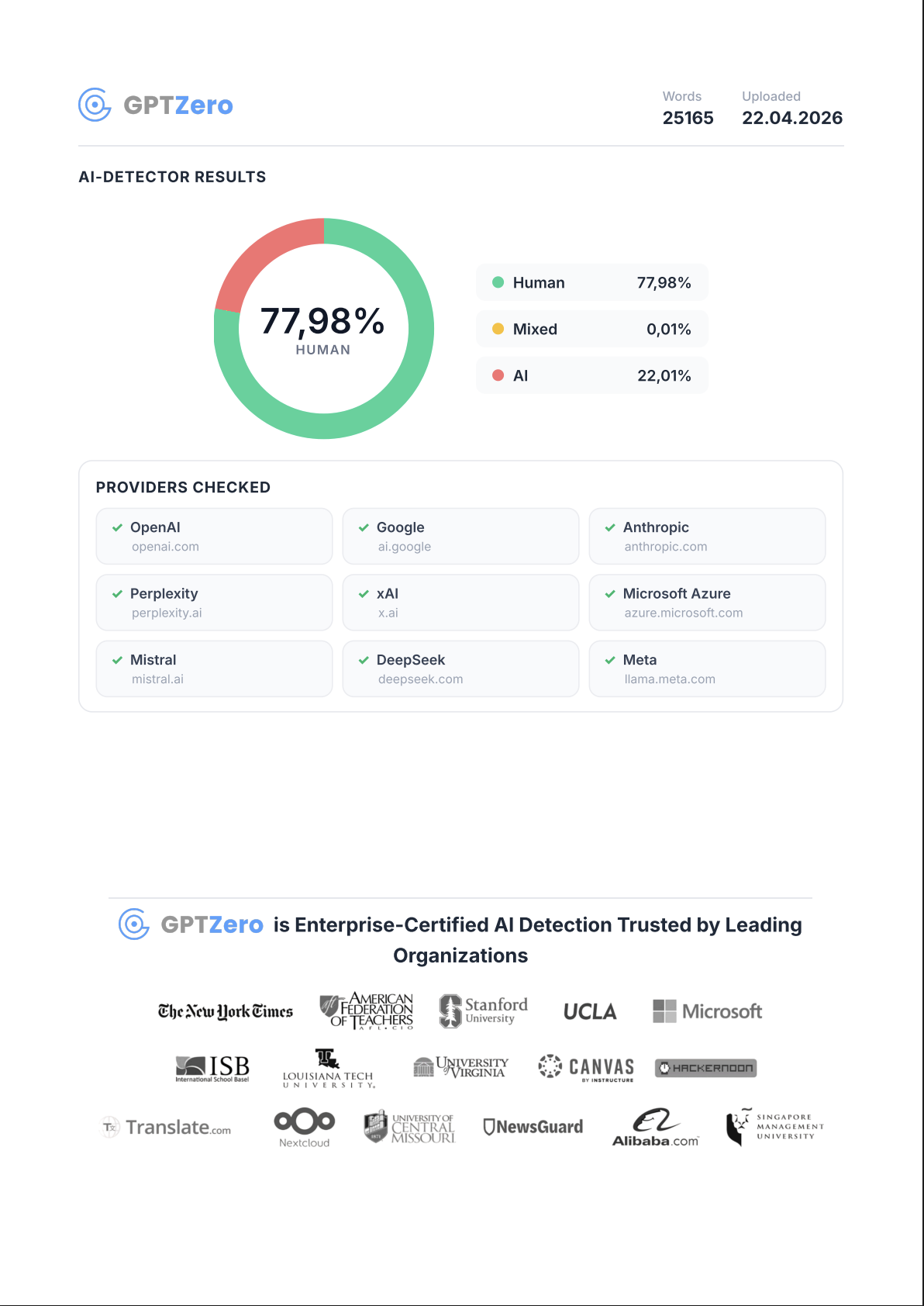
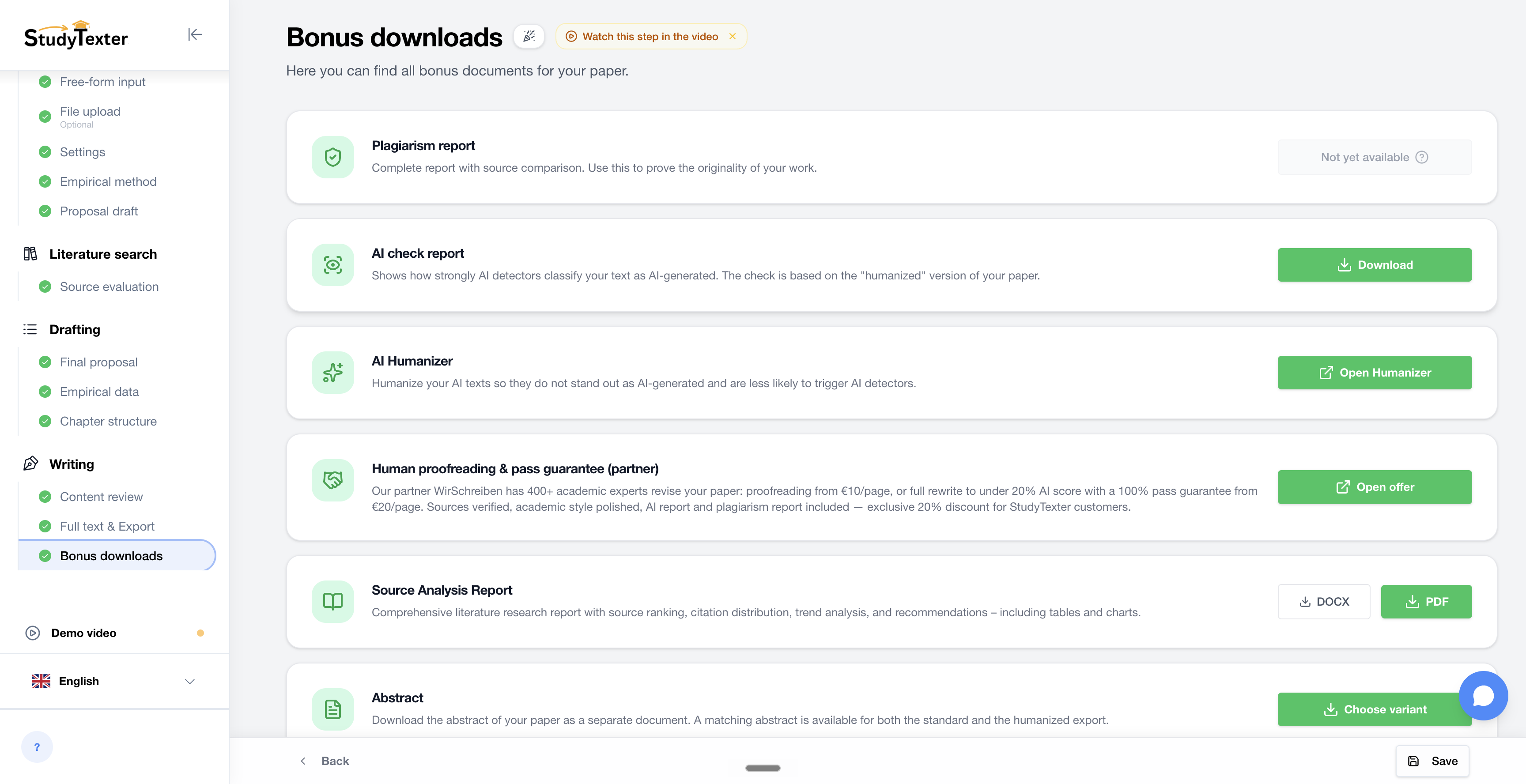
Before you export, the editor runs originality (Turnitin-style fingerprinting) and AI-detection. Both reports export as PDF you can attach to your submission. Declared-AI-use audit-trail is generated automatically.
Free preview: brief, source-list, first theme of synthesis. Pay $29 only when you export the finished review with real DOI bibliography, research gap, and originality + AI-detection report.
Literature review structures vary by discipline and country. The editor matches the right one automatically.
Brief, source-list, and the first theme of the synthesis are free. You only pay when you export the finished review.
Compared to 20–40 hours of your own time reading and synthesising, $29 for a chapter-ready literature review in 30–45 minutes is the rational trade.
An AI tool that finds, organises, and synthesises peer-reviewed sources into a chapter-ready literature review. The good ones (StudyTexter, Litmaps, ResearchRabbit, SciSpace) work with real DOI references. The free ones (ChatGPT and most free generators) hallucinate sources and connections that don't exist.
Free preview: brief, source-list, and the first theme of the synthesis are free. You only pay when you export the finished review (from $29 for a 3,000–10,000 word standalone review). See write my paper for full pricing.
30–60 sources is typical for a Master's literature review chapter, 60–120 for a PhD. The editor proposes 60–120 candidates first and you approve which ones to include. You can also upload your own PDFs if you have must-cite sources.
Real, verifiable DOIs — pulled live from Crossref, PubMed, and IEEE Xplore. Click any citation and the source opens in a new tab. This is the single biggest difference between StudyTexter and ChatGPT or free AI generators.
Litmaps and ResearchRabbit show you a citation network — a map of related papers. They do not write the literature review. StudyTexter takes the next step: organises sources by theme, drafts the prose, weaves the citations, and identifies the research gap. Different tools for different stages.
SciSpace and Paperguide summarise individual papers (“TL;DR per article”). StudyTexter synthesises across papers — the literature review is a thematic argument, not a list of summaries. The gap statement at the end is also unique.
Yes — the final section of every literature review is an explicit research gap statement: what the literature has and has not addressed, and where your dissertation fits. This is what makes a literature review pass review.
Yes — select “systematic review” at brief-time and the editor follows PRISMA conventions: search-string documentation, inclusion / exclusion criteria, PRISMA flow-chart, quality appraisal per source. Widely used in medicine, public health, and evidence synthesis.
APA 7, Harvard, Vancouver, Chicago (author-date and notes-bibliography), IEEE, MLA 9, AGLC4 (Australian law), McGill (Canadian law). Pick the one your supervisor requires; bibliography re-renders automatically.
Brief in 5 minutes, source-list approval in 10, full synthesis drafted in 20–30 minutes. Total: 30–45 minutes for a 3,000–10,000 word literature review. PRISMA systematic reviews take longer (60–120 minutes) due to extra documentation requirements.
The editor runs originality (Turnitin-style fingerprinting) and AI-detection before export. Anything flagged is rewritten and re-checked. Both reports export as PDF you can attach to your submission. Because the review is drafted fresh from your sources, there is no duplicate work to flag.
Yes — select “thesis literature review” or “dissertation literature review” at brief-time. The editor uses the right chapter structure (typically 20–40 pages, organised by theme, ending with the gap). The chapter exports cleanly into the full dissertation — see dissertation writing service for the post-review workflow. For early-stage source discovery before the lit review, see AI research assistant.
