AI research assistant · Research + Writing
Most AI research assistants (Elicit, Scite, ScholarAI, Web of Science AI) help you find and analyse sources. StudyTexter is the AI research assistant that also writes the paper around them: source discovery, thematic literature review, real DOI bibliography, full chapter drafting, originality + AI-detection report at export. Research and writing in one editor.
 Research + WritingReal DOI lookup
The leading AI research assistants are excellent at discovery and analysis. None of them writes the paper. Here's the honest breakdown:
Five steps from research question to a finished paper, thesis, or dissertation.
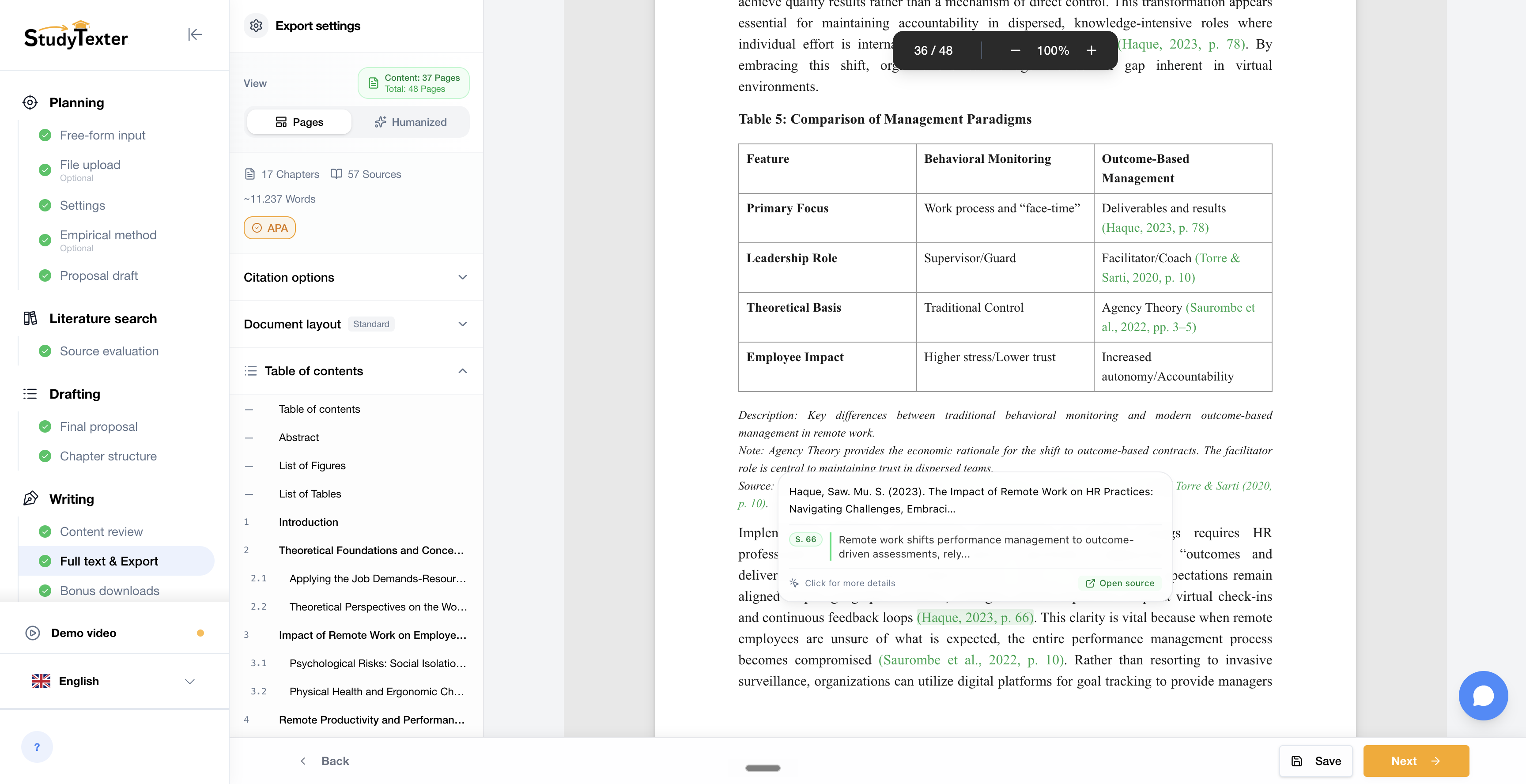
Research question with explicit scope, target output (paper / thesis / dissertation), reference style. Optionally upload your existing PDF library.
The assistant proposes 60–120 candidate sources from Crossref, PubMed, IEEE Xplore, and Google Scholar. You approve, swap, or add your own.
Sources organised by theme, synthesised into a chapter-ready literature review ending with the explicit research gap. See literature review AI for the dedicated workflow.
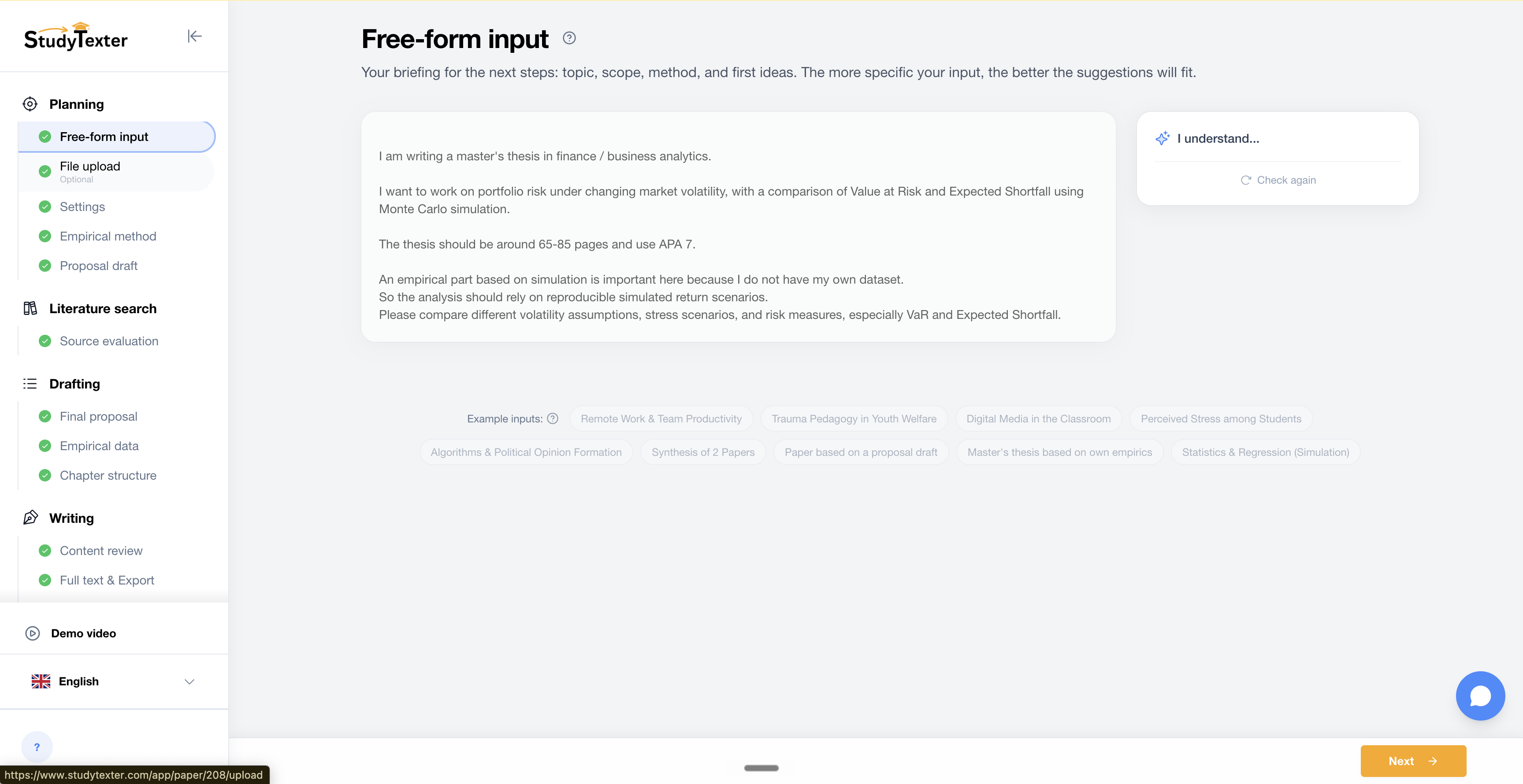
The same editor drafts the rest of the paper or thesis around your synthesised literature — methodology, findings, discussion, conclusion. Real DOI citations throughout.
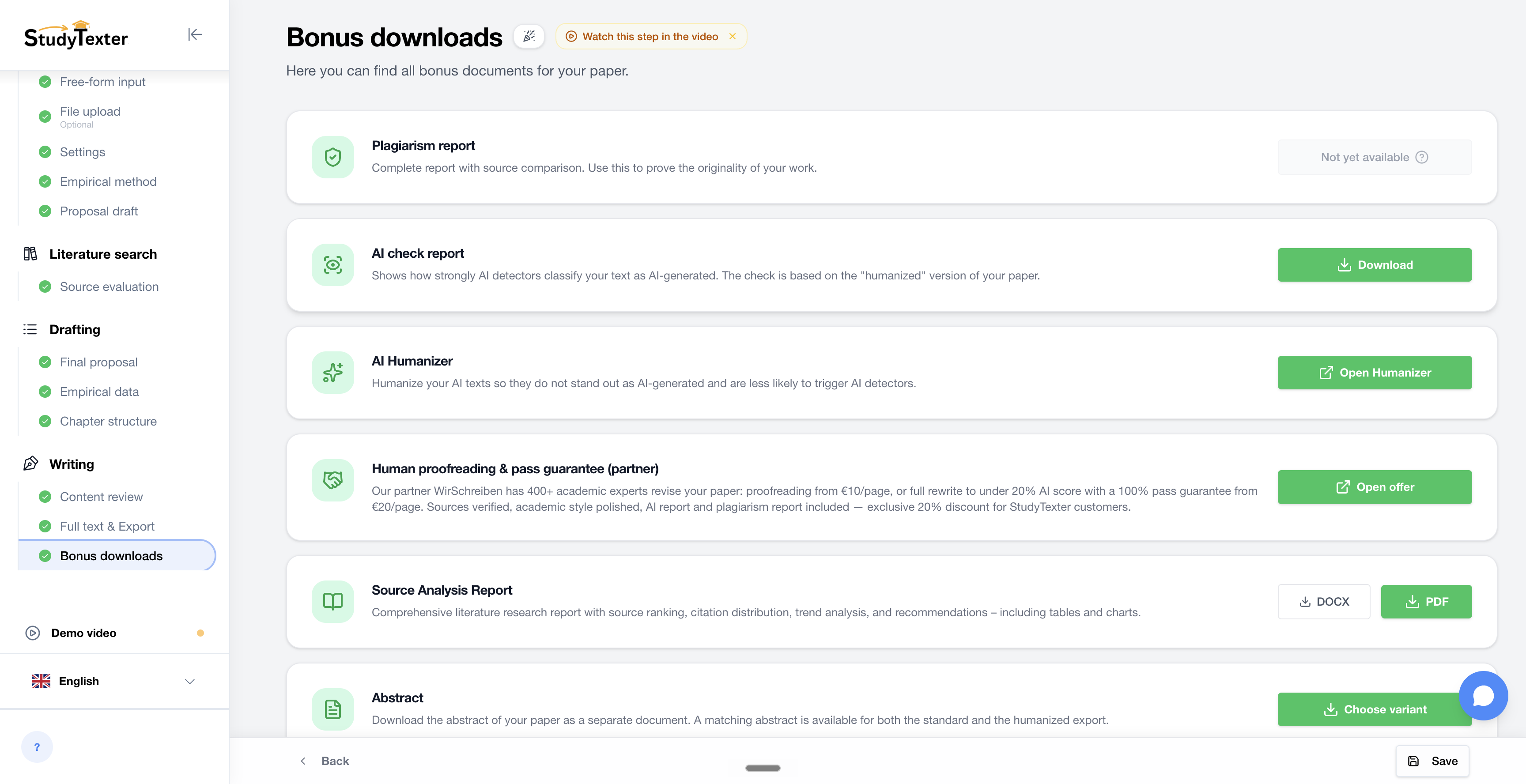
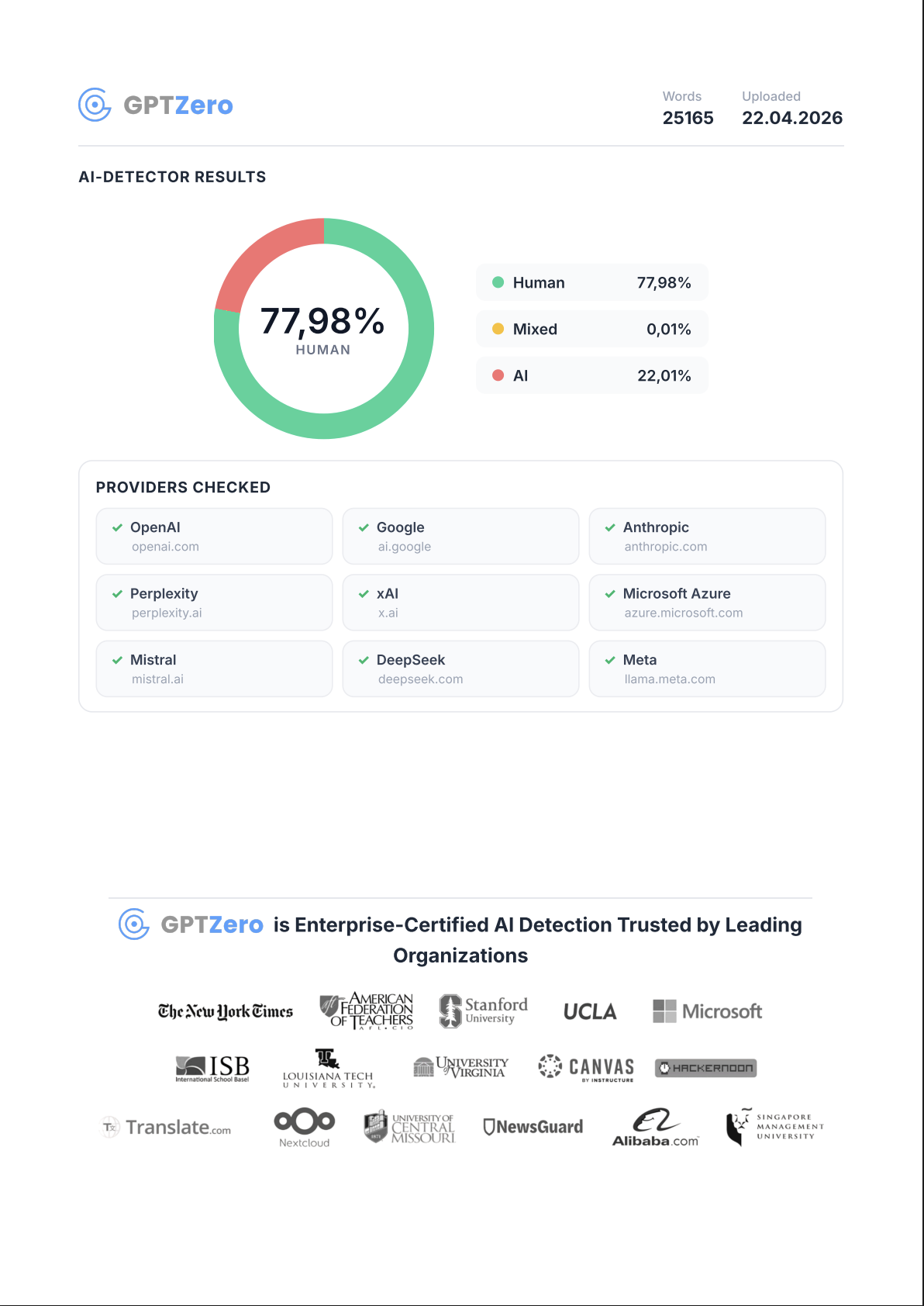
Both reports ship with the export. Declared-AI-use audit-trail captures the full research and writing process.
What each leading AI research assistant does best, and where StudyTexter complements them.
| Capability | StudyTexter | Discovery tools (Elicit, Scite, ScholarAI, Web of Science) |
|---|---|---|
| Literature search (Crossref / PubMed / IEEE) | Yes, integrated | Best-in-class (Elicit, Web of Science) |
| Citation verification (claim-checking) | Yes, integrated | Scite — best-in-class |
| Source extraction + tables | Yes, integrated | Elicit — best-in-class |
| Question-answering over papers | Yes, integrated | ScholarAI — best-in-class |
| Thematic literature review writing | Yes — full chapter, thematic, ends with gap | Limited / per-paper summaries |
| Full paper / thesis drafting | Yes — chapter-by-chapter | No |
| Real DOI bibliography in drafted paper | Yes — live lookup | Not applicable (no drafting) |
| Originality + AI-detection at export | Yes — both reports | No |
| Cost | Free preview; $39–$249 per paper | $20–$80 / month subscription |
Systematic literature search (Elicit, Web of Science), citation forensics (Scite), question-answering over a small library of papers (ScholarAI). These are best-in-class at what they do; StudyTexter does not displace them.
Synthesising 30–120 sources into a literature review chapter; drafting the full paper, thesis, or dissertation around the synthesised literature; getting real DOI bibliography in the drafted text; originality + AI-detection report at export. StudyTexter fills the gap from “sources found” to “paper finished”.
Many academic users discover with Elicit or Web of Science, then upload the discovered PDF library into StudyTexter for synthesis and drafting. The audit-trail captures both stages of declared AI-use.
Free preview: brief, source-list, first theme of synthesis. Pay $39–$249 only when you export the finished paper, thesis, or dissertation with real DOI bibliography and originality + AI-detection report.
Different AI research assistants fit different academic cultures and reference styles.
Source discovery and synthesis preview are free. You pay only when you export a finished paper, thesis, or dissertation.
Compared to $30–$80 / month for discovery-only tools (Elicit, Scite, Web of Science), per-paper pricing for StudyTexter often costs less if you write 1–3 papers per year. Many users keep both: discovery tool subscription + per-paper StudyTexter export.
A tool that helps with academic research tasks: literature search, citation extraction, claim verification, question-answering over papers, and (in StudyTexter's case) literature review synthesis plus paper drafting. The leading discovery tools are Elicit, Scite, ScholarAI, and Web of Science AI; StudyTexter complements them by writing the paper around the discovered sources.
Depends on the job. Source discovery: Elicit, Web of Science. Citation verification: Scite. Question-answering over papers: ScholarAI, NotebookLM. Synthesis + paper drafting: StudyTexter. Most academic users use 2–3 in combination.
Both. The same editor does discovery (Crossref / PubMed / IEEE Xplore lookup), synthesis (thematic literature review with gap statement), and drafting (full paper, thesis, or dissertation with real DOI citations). Other tools split these into separate products; StudyTexter integrates them.
Elicit is best-in-class at systematic literature search and citation-table extraction — it doesn't write the paper. StudyTexter does discovery (less powerful than Elicit for pure search) plus synthesis plus full paper drafting. If you need rigorous systematic-review-grade discovery, use Elicit; if you need to also write the paper, use StudyTexter (or use both).
Scite's superpower is “smart citations” — verifying whether existing citations actually support the claim they're attached to. StudyTexter generates new citations rather than verifying existing ones. Complementary tools; many researchers use both.
ScholarAI excels at question-answering over a small library of uploaded papers. StudyTexter excels at synthesis (thematic literature review across the same library) plus full paper drafting. Different stages of the research workflow.
Yes — the assistant proposes 60–120 candidate sources from Crossref, PubMed, IEEE Xplore, and Google Scholar based on your research question. You approve which to include. For purely systematic literature search, Elicit and Web of Science are more rigorous; for discovery + synthesis + writing, StudyTexter integrates the workflow.
Yes — every DOI is verified against Crossref / PubMed / IEEE Xplore live before it's included in the bibliography. For deeper citation-claim verification (does this citation actually support the claim?), Scite is best-in-class.
Yes. After source discovery and synthesis, the same editor drafts the full paper, thesis, or dissertation around the sources. Real DOI citations throughout, originality + AI-detection report at export. See AI paper writer for the dedicated paper-drafting workflow.
AI assistance with declared use is now permitted at most major universities (UCL, Stanford, Oxford, Bocconi, Bologna have explicit policies; many Russell-Group UK and Ivy-League US universities have followed). The audit-trail StudyTexter generates is the disclosure. Discovery tools (Elicit, Scite) are uncontroversial — they support, not replace, your research.
ChatGPT is a general-purpose conversational AI — it hallucinates citations. AI research assistants (Elicit, Scite, ScholarAI, StudyTexter) work with real, verifiable academic sources. The discovery tools use academic databases; StudyTexter does live DOI lookup. Both categories solve ChatGPT's biggest weakness for academic work.
Yes — the discovery + synthesis + drafting workflow scales from term papers (8–20 pages) to full PhD dissertations (60–120 pages). See AI thesis writer for the thesis-specialised workflow or AI dissertation writer for the dissertation-specialised one.