Dissertation AI ghostwriter · Declared-AI
“Dissertation ghostwriter” historically meant a human who writes the dissertation for you anonymously. That model is now criminalised in the UK (Skills Act 2022) and AU (TEQSA since 2020), and frequently flagged at US universities. “Dissertation AI ghostwriter” is the modern compliant alternative: AI drafts the dissertation, you brief and approve every step, the declared-AI-use audit-trail is the disclosure. From $199 for a PhD dissertation, drafted in 3–4 hours.
 Compliance-safeDrafted in 3–4 hours
Human dissertation ghostwriting carried four risks. Each is now addressed by declared-AI-use:
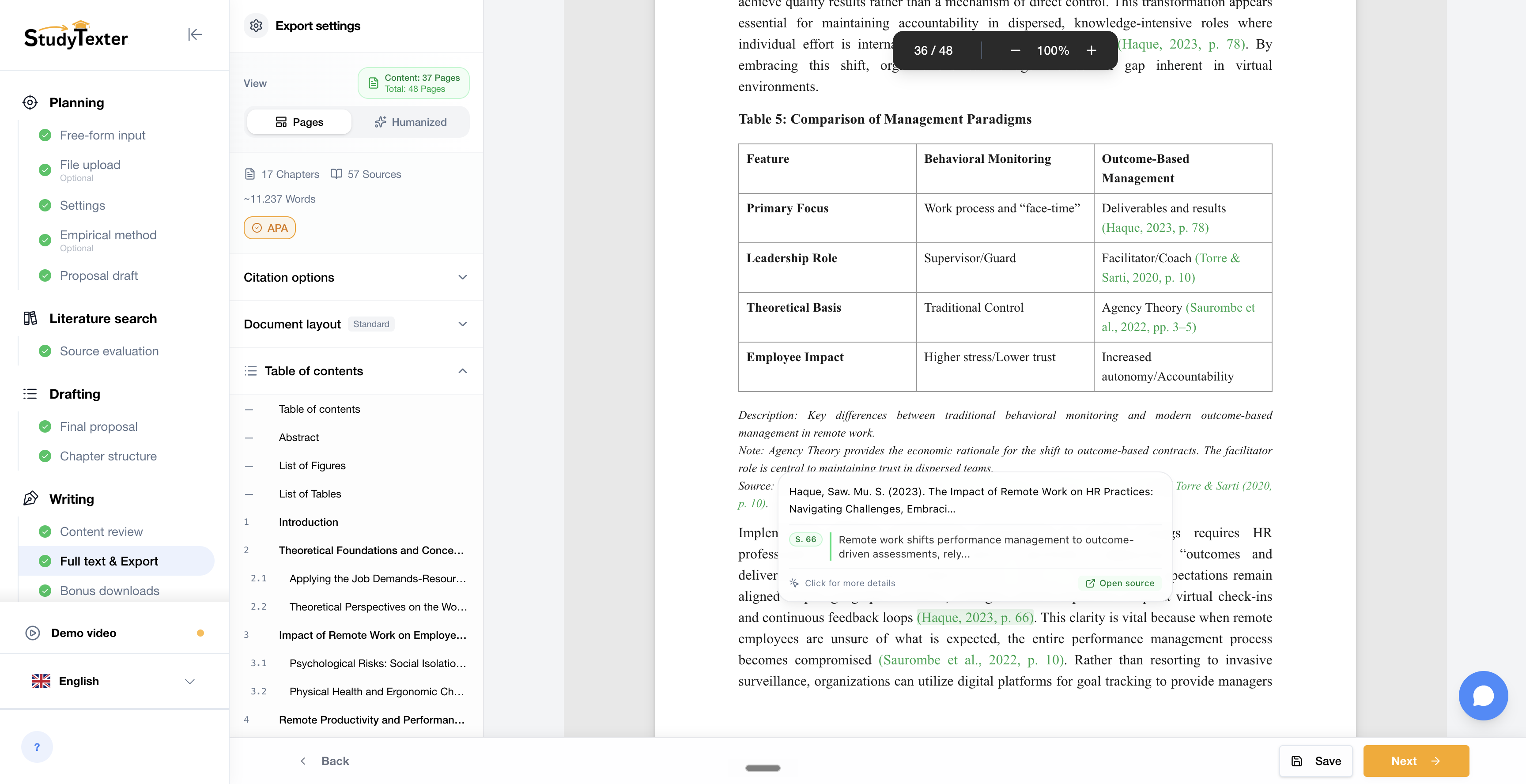
Five steps from blank page to a full 60–120 page PhD dissertation draft with audit-trail.
Title, research question, target word count (PhD 60–120 pages), reference style, doctoral-committee requirements. Upload your approved proposal (see dissertation proposal).
PhD structure: intro / literature review / theoretical framework / methodology / findings / discussion / conclusion / abstract. Approve, swap, or refine. Outline locks the dissertation's architecture.
Each chapter drafts against the outline, pulling real DOI sources, weaving citations. Theoretical framework chapter cites foundational theorists in your discipline. Methodology defends mixed-methods explicitly when applicable.
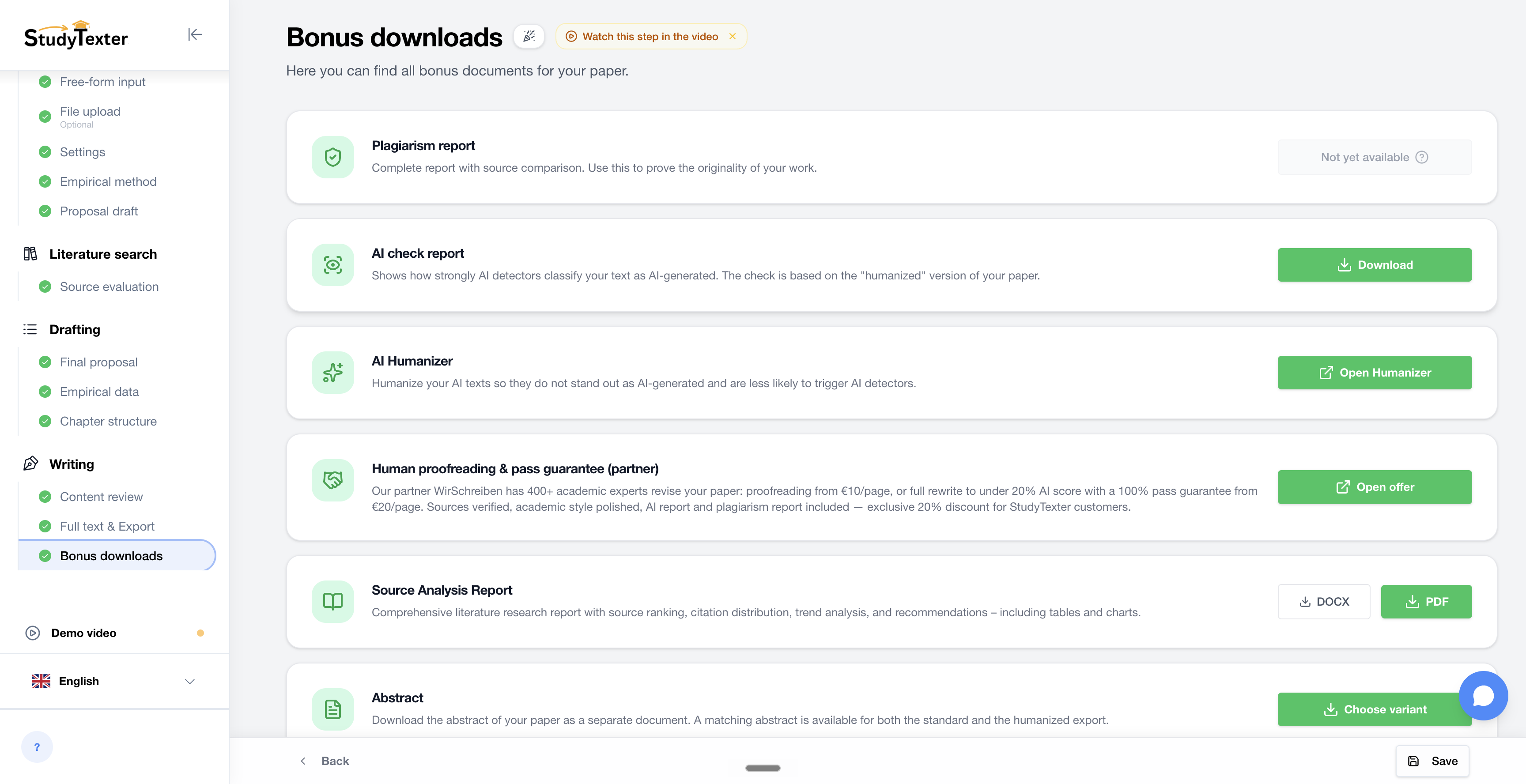
Upload interview transcripts, survey data, pilot results, fieldwork notes, experimental data. The editor weaves them into methodology and findings chapters.
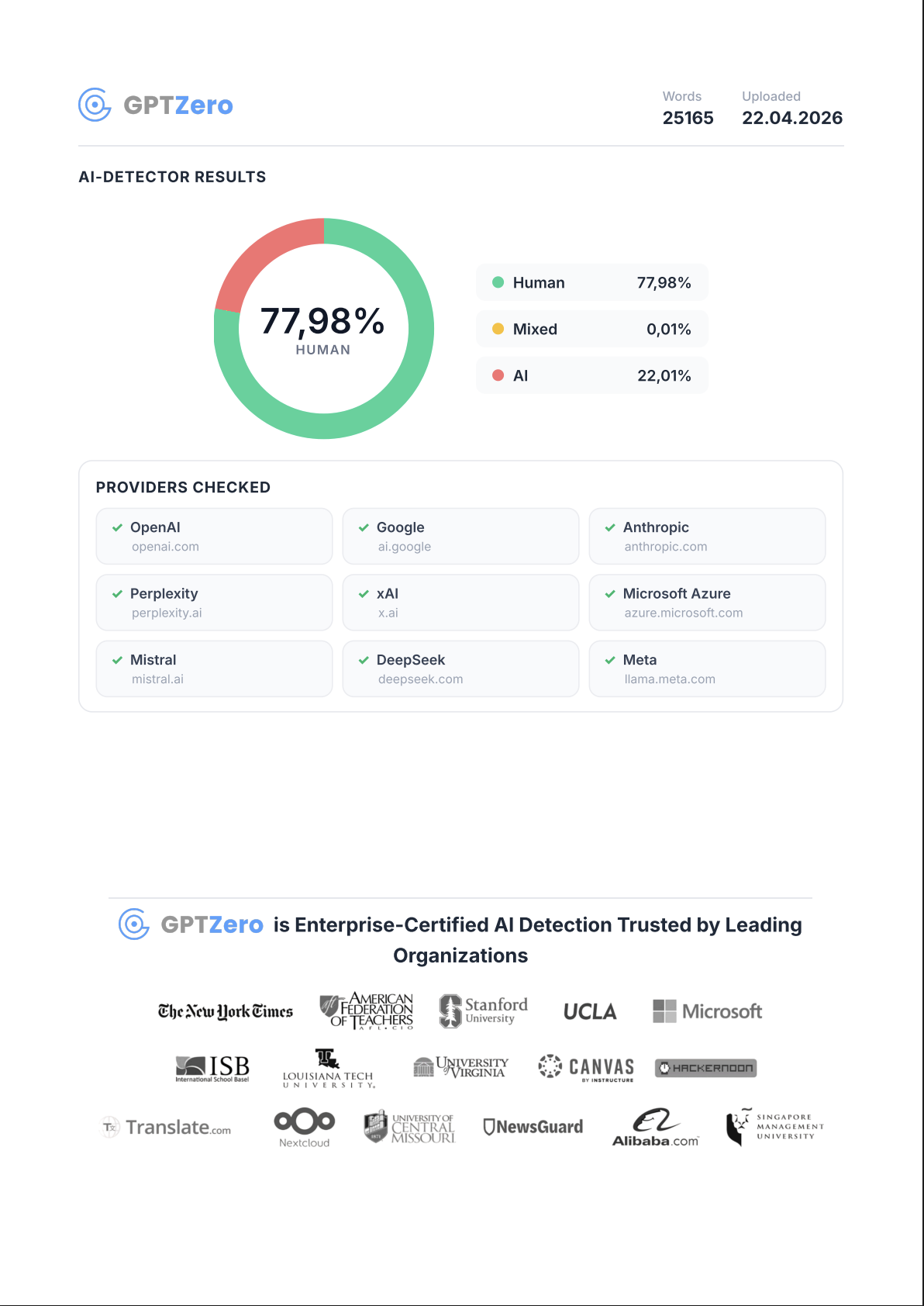
Both reports run before export. Audit-trail compiles automatically: brief, source-list, outline, draft history, edits. Export DOCX, PDF, or LaTeX with bibliography, appendices, and audit-trail PDF.
The two paths to a finished dissertation when you can't write it all yourself.
| Capability | Human ghostwriter mill ($5,000–$10,000+) | Declared-AI dissertation drafting (StudyTexter, $199–$249) |
|---|---|---|
| Authorship clarity | Anonymous — you don't know who | AI-drafted; you brief, approve, edit, submit |
| Audit-trail | None (hidden) | Full (brief, sources, drafts, edits) |
| Legal status (UK / AU) | Criminalised | Declared AI-use — permitted at most major universities |
| Originality (Turnitin) | Often flagged (recycled work) | Drafted fresh; originality report ships |
| AI-detection | Mills now silently use ChatGPT; you're flagged without knowing | AI-detection runs before export; you see the report |
| Citation quality | Often invented | Live DOI lookup (Crossref / PubMed / IEEE) |
| Discipline expertise | Unknown / generic | Discipline-specific structure + reference style |
| Turnaround | 4–6 weeks | 3–4 hours for full first draft |
| Cost | $5,000–$10,000+ | $199–$249 per PhD dissertation |
You brief the research question. You approve the outline. You upload your own primary research data. You edit the draft. You submit. The AI does the writing labour; you do the intellectual work of scoping, approving, and integrating. This is the declared-AI-use authorship model that universities now accept.
Every brief, source, outline, draft, and edit is timestamped automatically. When your university asks you to declare AI-use (UCL, Stanford, Oxford, Bocconi, Bologna have explicit policies; most Russell-Group and Ivy-League followed), the audit-trail PDF is the disclosure. Human ghostwriter mills can't produce one because they hide what they used.
UK Skills Act 2022 criminalises commercial essay-mill services explicitly. AU TEQSA enforces the same. Declared-AI-use with disclosure is the compliant academic path on both sides.
Free preview: brief, 8-chapter outline, first chapter. Pay $199–$249 only when you export the finished dissertation with real DOI bibliography, originality + AI-detection reports, and audit-trail PDF for declared-AI-use disclosure.
Regulatory regimes vary; the declared-AI-use audit-trail is compliant in every major academic jurisdiction.
Brief, outline, and the first chapter are free. You only pay when you export the finished dissertation.
Human dissertation ghostwriting costs $5,000–$10,000+, takes 4–6 weeks, is criminalised in UK / AU, and produces work without an audit-trail. Declared-AI dissertation drafting costs $199–$249, takes 3–4 hours, is permitted across all major academic jurisdictions, and produces a structured disclosure PDF.
An AI tool that drafts a full Master's or PhD dissertation for you, with declared-AI-use audit-trail. “Ghostwriter” traditionally meant a human who writes anonymously — that model is now criminalised in the UK (Skills Act 2022) and AU (TEQSA). The modern compliant alternative is AI drafting with declared use: you brief and approve, the AI writes, the audit-trail PDF is your disclosure.
Yes — declared-AI-use is permitted at most major universities globally (UCL, Stanford, Oxford, Bocconi, Bologna, and most Russell-Group + Ivy-League institutions have explicit policies). The audit-trail StudyTexter generates is the disclosure. Hiring an anonymous human ghostwriter is criminalised in the UK and AU and risky at US universities.
Yes when declared. You remain the author because you brief, approve, edit, and submit. The AI does the writing labour; you do the intellectual work of scoping the research, approving each step, and integrating primary research. Hidden ghostwriting (human or AI) is the unethical path; declared-AI-use is the ethical one.
You disclose it via the audit-trail PDF. Hiding AI use is risky — modern AI-detection tools (GPTZero, Originality.ai, Turnitin AI-writing detection) flag undisclosed AI-drafted text at high rates. Declaring is the safer and legally-compliant path.
Cost ($199–$249 vs $5,000–$10,000+); speed (3–4 hours vs 4–6 weeks); audit-trail (full structured vs none); legal status (declared AI-use compliant vs criminalised in UK / AU). The human ghostwriter model is being replaced by declared-AI-use across major academic jurisdictions.
ChatGPT hallucinates citations and loses coherence across 100+ pages. StudyTexter uses real DOI bibliography (Crossref / PubMed / IEEE Xplore live lookup), drafts chapter-by-chapter with cross-references, and ships with originality + AI-detection + declared-AI-use audit-trail. ChatGPT can't produce any of those.
The editor runs originality (Turnitin-style fingerprinting) and AI-detection before export. Anything flagged is rewritten and re-checked. Both reports export as PDF to attach. Because every dissertation is drafted fresh from your brief, no duplicate work to flag.
Both. PhD: 60–120 pages, 8-chapter structure with theoretical framework, doctoral-committee tone, $199–$249. Master's: 40–80 pages, 5-chapter structure, $149–$169. The editor matches the right structure based on work-type selection.
Yes — upload interview transcripts, survey data, pilot study results, fieldwork notes, or experimental data. The editor weaves them into the methodology and findings chapters with proper qualitative / quantitative / mixed-methods analysis framing.
Functionally, it does what a ghostwriter does — drafts the dissertation. Legally and academically, it's positioned as an AI assistant because you remain the author (you brief, approve, edit, submit) and the audit-trail makes the AI-use transparent. The terminology is a transition: “ghostwriter” describes the historical analogue, “AI assistant with declared use” describes the legal frame.
Brief (your research question, target length, reference style), source-list (every DOI included in the bibliography), chapter-outline (with approval timestamps), draft history (every chapter version), edit log (your interventions). Timestamped end-to-end. The format universities now expect for declared-AI-use disclosure. For the broader "academic ghostwriter replaced" framing of the same compliance model, see academic ghostwriter.
Some supervisors haven't caught up with their institution's policy yet. Show them the audit-trail PDF and your institution's declared-AI-use policy document. If your institution permits declared-AI-use (most do now), individual supervisor preference doesn't override institutional policy. If your institution does NOT yet permit it, do not use AI for the dissertation — wait until the policy updates.
