ChatGPT alternative · 6 tools compared
ChatGPT is the most-used AI for academic writing in 2026 and the most-rejected. The three failure modes are well-known: hallucinated citations, AI-detection flags, no declared-AI-use audit-trail. Six specialised academic AI tools have emerged to solve these. This page compares them objectively — strengths, weaknesses, best-fit use cases — so you can pick the right one for your work.
 Objective comparison6 tools tested
ChatGPT is excellent at general writing. It falls short for academic work on five specific axes:
No single tool wins on every dimension. Pick by the job you need done:
Best fit: full thesis or dissertation (40–200 pages) with real DOI citations, originality + AI-detection at export, declared-AI-use audit-trail. From $129 per thesis. Weaknesses: not a free co-pilot like Jenni; not a paraphrasing tool like Paperpal. Wins on: end-to-end drafting + verification.
Best fit: you have a draft and want sentence-level polish, citation formatting, and academic-language correction. Strong on language quality; doesn't draft full chapters. Pricing: $30–$50 / month subscription. Wins on: polish for non-native English writers.
Best fit: you want autocomplete-style suggestions as you write each sentence. Useful when you have a clear argument in mind and want assistance phrasing it. Pricing: $20 / month subscription. Wins on: co-pilot writing experience.
Best fit: verifying whether existing citations actually support the claim they're attached to (“smart citations”). Strong on citation forensics; doesn't draft text. Pricing: $20 / month subscription. Wins on: citation integrity audit.
Best fit: grammar checking, citation formatting (Scribbr Citation Generator is excellent), and proofreading. Doesn't draft chapters end-to-end. Pricing: per-service. Wins on: citation formatting + proofreading.
Best fit: drafting the thesis statement and chapter outline before you start writing. Useful as a brainstorming companion. Pricing: $15–$25 / month subscription. Wins on: thesis-statement crafting.
The dimensions that matter for academic writing.
| Capability | ChatGPT | Best alternative for this job |
|---|---|---|
| Real DOI citations (Crossref / PubMed) | Hallucinated | StudyTexter (live lookup); Scite (verification) |
| Full thesis drafting (40–200 pages) | Context-window limits | StudyTexter (chapter-by-chapter) |
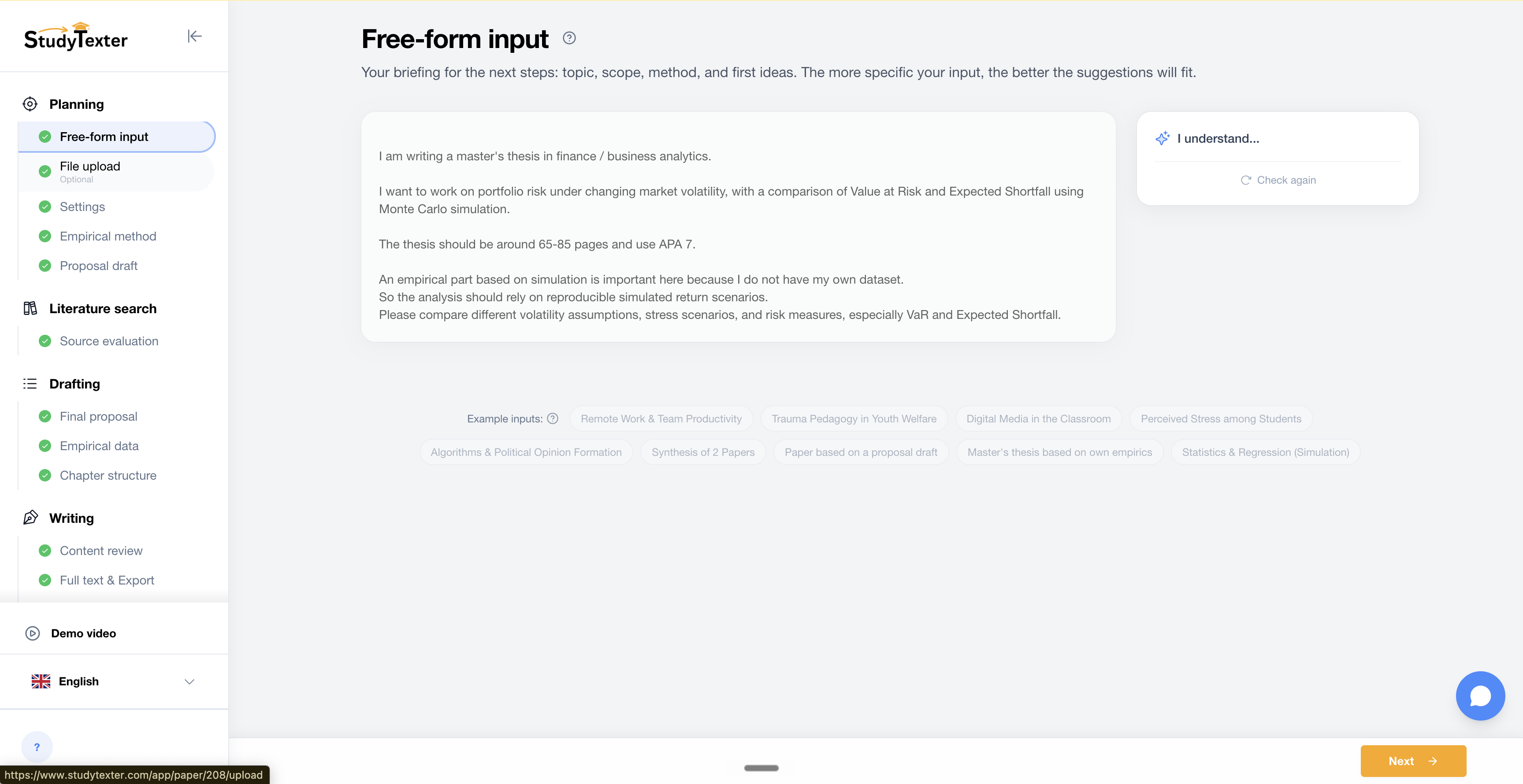
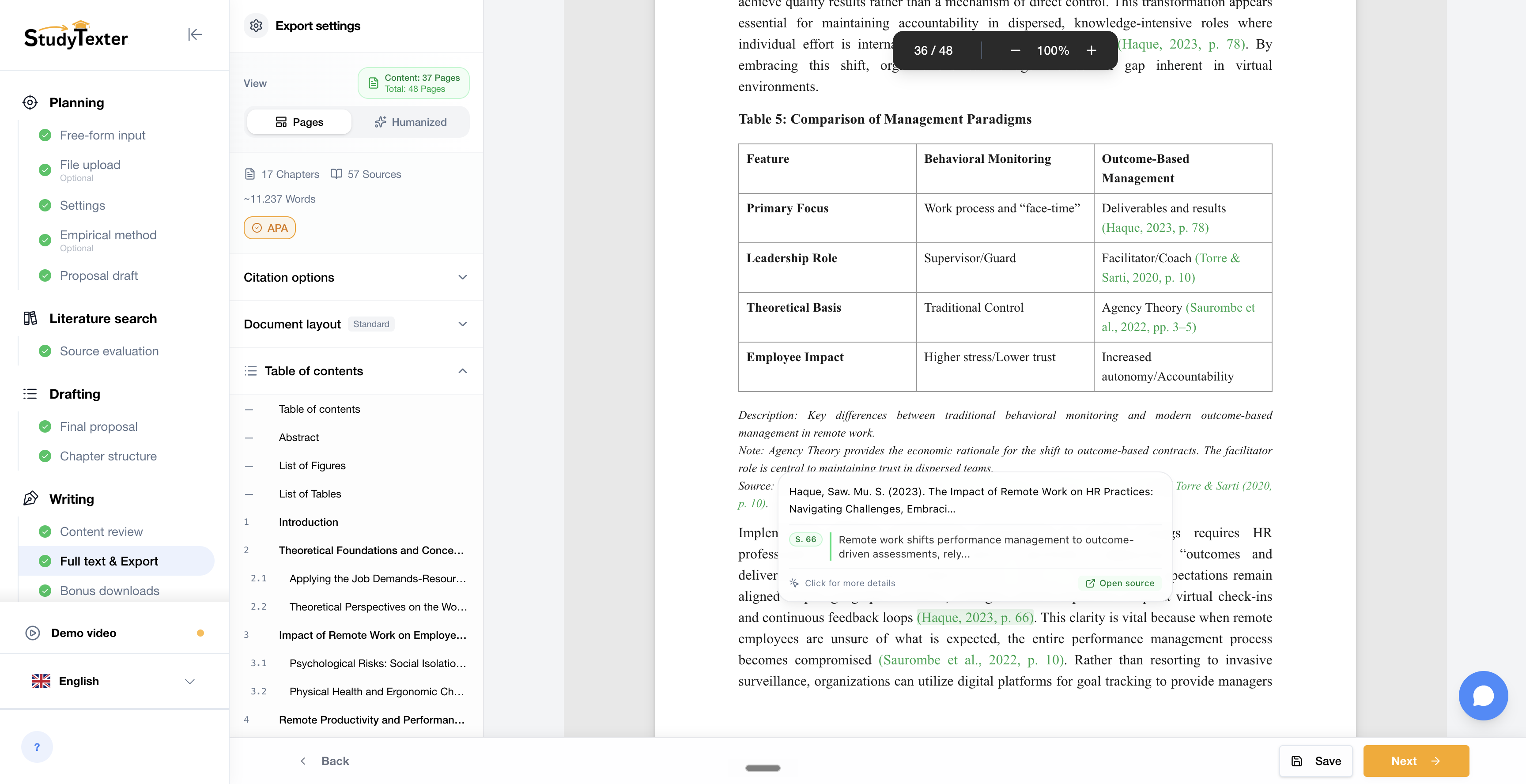
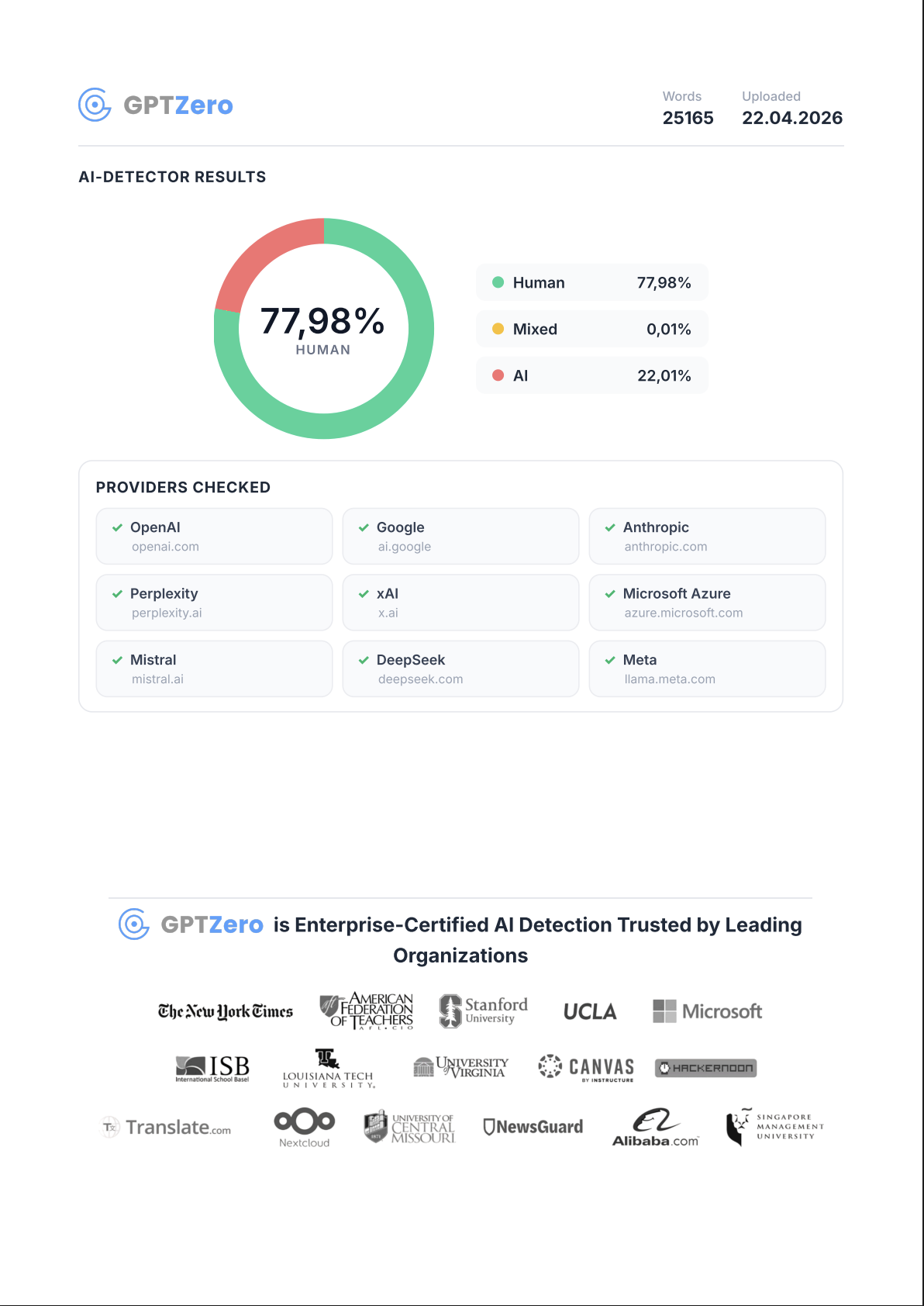
| Originality + AI-detection at export | No | StudyTexter (both reports ship with export) |
| Declared-AI-use audit-trail | Chat log only | StudyTexter (structured) |
| Discipline-specific reference styles | Inconsistent | StudyTexter, Paperpal, Scribbr (all major styles) |
| Inline writing co-pilot | Excellent | Jenni (autocomplete) |
| Language polish for non-native English | Good | Paperpal (purpose-built) |
| Citation verification (claim-checking) | No | Scite (smart citations) |
| Thesis-statement generation | Generic | Thesify (purpose-built) |
| Grammar / proofreading | Good | Scribbr |
| Cost | Free – $20/mo | Varies — see Workflow section above |
If you're writing anything where supervisors will check the bibliography (essay, term paper, thesis, dissertation), you need real DOI citations. ChatGPT hallucinates them. StudyTexter looks them up live against Crossref / PubMed / IEEE Xplore. Scite verifies existing citations. The other tools mostly inherit ChatGPT's limitations on this dimension.
Full drafting (you brief, AI writes all chapters): StudyTexter. Co-pilot (you write, AI suggests next sentence): Jenni. Polish on existing text: Paperpal. Different jobs.
Most major universities (UCL, Stanford, Oxford, Bocconi, Bologna) now require structured disclosure of AI assistance. StudyTexter generates a structured audit-trail automatically; the other tools require manual reconstruction from chat logs. If your university requires disclosure, the audit-trail is a hard requirement.
Free preview to see the difference. Pay $39–$249 only when you export a finished paper, thesis, or dissertation with real DOI citations and originality + AI-detection report.
Different tools fit different academic cultures and reference styles.
Subscription vs. per-thesis pricing. Pick by use intensity.
Most students pick 1–2 tools by best-fit use case rather than subscribing to all of them. The most common combinations: StudyTexter (drafting) + Paperpal (polish); or Jenni (co-pilot) + StudyTexter (final draft with verified citations).
Depends on the job. For full thesis or dissertation drafting with real citations: StudyTexter. For paraphrasing and language polish: Paperpal. For inline co-pilot writing: Jenni. For citation verification: Scite. For thesis-statement generation: Thesify. See the workflow section above for the full breakdown.
Three reasons specific to academic writing: ChatGPT hallucinates citations (invents DOIs that don't exist); modern AI-detection tools flag ChatGPT-generated text at 70–95%; ChatGPT keeps a chat log but not a structured declared-AI-use audit-trail. Specialised alternatives solve one or more of these.
For real-citation lookup and outline drafting: StudyTexter's free tier (brief, outline, first chapter, citation generator). For paraphrasing within a free monthly limit: QuillBot. For lit-review source discovery: SciSpace and ResearchRabbit have generous free tiers.
For academic-specific jobs (real DOI citations, full thesis drafting, originality + AI-detection report, declared-AI-use audit-trail): yes, StudyTexter is purpose-built for those. For general-purpose tasks (brainstorming, paraphrasing, conversational drafting): ChatGPT is faster and cheaper. Many users use both.
For sentence-level paraphrasing and language polish: Paperpal is purpose-built and stronger. For drafting the full thesis from scratch: Paperpal doesn't do that; it polishes what you've written. ChatGPT can draft (with hallucinated citations); StudyTexter can draft with real citations. Different jobs.
Jenni is an inline autocomplete co-pilot; ChatGPT is conversational. If you prefer to write each sentence with AI suggestions as you go, Jenni is the cleaner UX. If you prefer to brief the AI and let it draft a section, ChatGPT or StudyTexter fits better.
For full thesis drafting (40–200 pages): StudyTexter. For polish on a draft you've written: Paperpal. For thesis-statement crafting: Thesify. See AI thesis writer for the specialised thesis-writing comparison.
Same answer scaled to dissertation length. PhD dissertations (60–120 pages) need a tool that handles long-form coherence and discipline-specific reference styles. StudyTexter is built for this; see AI dissertation writer.
Depends on the research stage. Source discovery: SciSpace, ResearchRabbit, Litmaps, Scite. Literature review writing: literature review AI. Citation verification: Scite. Drafting the paper itself: StudyTexter.
Not always. ChatGPT Plus is $20/month. Most academic alternatives sit in the $15–$50/month range, similar order of magnitude. StudyTexter uses per-paper pricing instead ($39–$249) which is cheaper for occasional users and more expensive for daily users. For the ChatGPT-specific thesis-writing workflow, see ChatGPT for thesis writing.
Yes, most students do. Common combinations: StudyTexter (drafting) + Paperpal (polish); Jenni (co-pilot) + StudyTexter (final draft with real citations); ChatGPT (brainstorm) + StudyTexter (final draft). The audit-trail for declared-AI-use captures whichever tools you used.
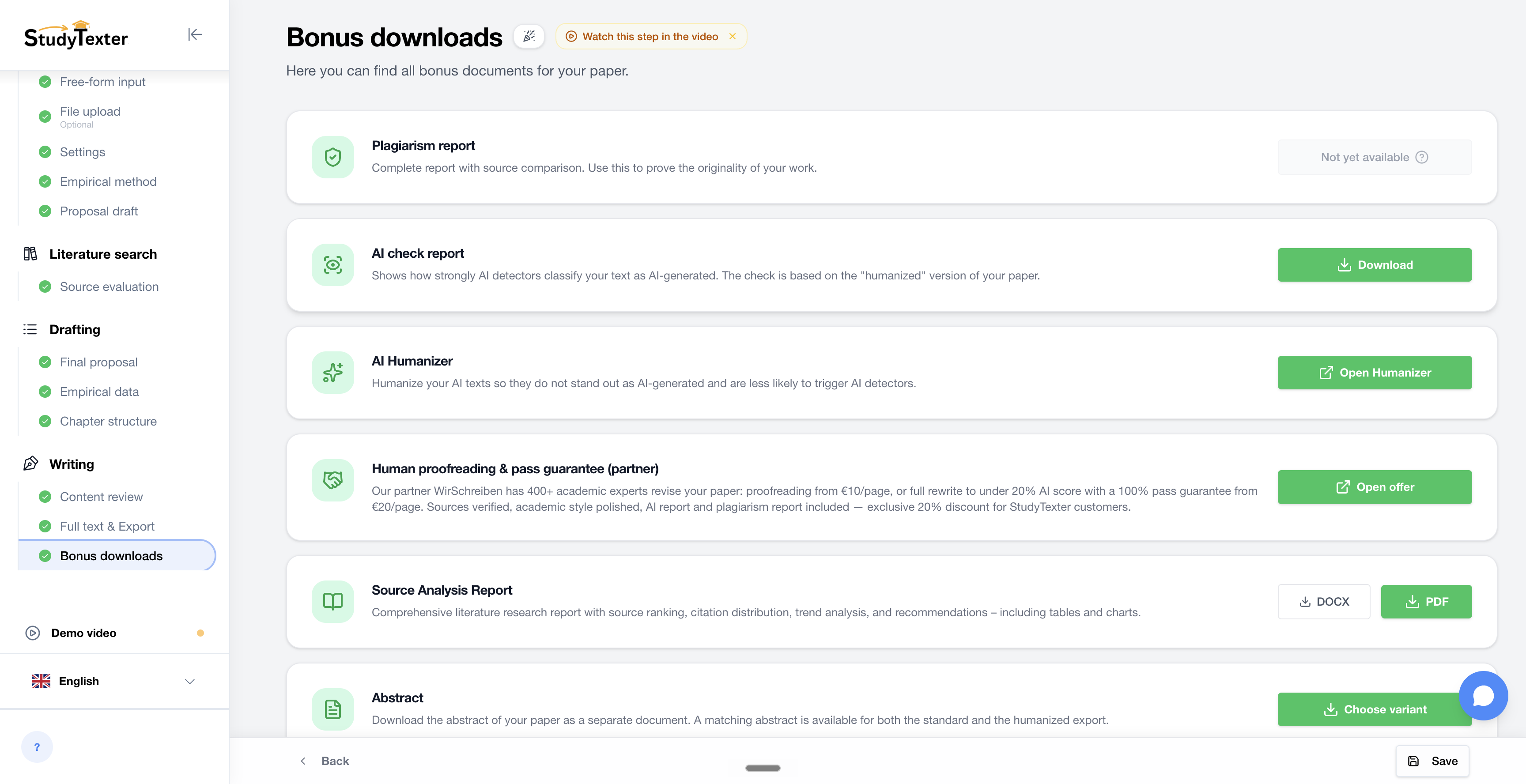
StudyTexter ships originality (Turnitin-style fingerprinting) and AI-detection reports with every export. Paperpal includes a plagiarism check on higher tiers. The other tools (Jenni, Scite, Scribbr AI, Thesify, plus ChatGPT itself) do not ship these reports natively — you'd run them separately (Turnitin, GPTZero, Originality.ai) and attach manually.
