
Perplexity vs ChatGPT: Which One Wins Which Task?
This comparison is built on seven published studies that test both tools on sources and citations. For each one we list who ran it, which version they tested and how big the sample was. We also checked the current plans and prices on October 12, 2026.

 Janosch & Dr. Jonathan SchulteStudyTexter editorial team
Updated
16 min read
Janosch & Dr. Jonathan SchulteStudyTexter editorial team
Updated
16 min readDisclosure: This comparison is published by StudyTexter, a company in the same market. We only state verifiable facts with source and date. Method
Contents
There is no overall winner, so pick by task. Perplexity is better for finding current web sources with links: in two independent studies of news questions, its free version had fewer sourcing errors than free ChatGPT[20][21]. Based on features (we have not tested this), ChatGPT is the better choice for learning: study mode is included in the free plan[9]. For a reference list on an academic topic, neither wins: the studies split 2 to 2, and none found either tool error-free. Paid plans start at $8 (ChatGPT Go) and $20 (Perplexity Pro) a month in the US; verified students get Perplexity Education Pro for $10. For the paper itself, use StudyTexter: you accept or reject each source, every citation shows its page number, and it is free up to your proposal draft.
Perplexity vs ChatGPT: the winner for each task
A tool can be good at finding news and weak at building a reference list. So we compare seven study tasks. Each verdict points to a study or to a documented feature.
| Task | Winner and evidence |
|---|---|
| Find current web sources and news | Perplexity Fewer sourcing errors in both news studies: 15% vs 24% (EBU/BBC)[20], 37% vs 67% wrong answers (Tow Center)[21]. |
| Get a reference list for a paper topic | No winner Studies split 2 to 2. ChatGPT did better in a test across five subjects and in an orthopedics test[22][24], Perplexity in two other medical tests[23][25]. A statistical re-check of a test with the same design as the orthopedics study found only “very small” differences[26]. |
| Understand a topic and practice for an exam | ChatGPT by features, not tested Study mode is part of the free plan[9]. Perplexity’s help center lists Learn Mode with flashcards and quizzes under Education Pro[15]. |
| Use it for free | Tie ChatGPT Free: unlimited everyday text chats with web search[7]. Perplexity Free: practically unlimited basic searches, 3 Pro searches a day, 1 research query a month[12]. |
| Pay as little as possible | ChatGPT students: it depends ChatGPT Go costs $8 a month in the US and may include ads[4][6]. Students: Perplexity Education Pro $10[15]; at a U.S. college or university, 4 months of ChatGPT Plus free until Oct 31, 2026[10]. |
| Keep your chats out of AI training | Tie Both use chats from personal accounts for training unless you switch it off[11][17]. |
| Write the paper with checked sources and page numbers |  The vendor pages we read do not mention a page number for each citation. StudyTexter lets you accept or reject each source and shows the page number for every citation in the Evidence View. |
In short: Perplexity for current information with links, ChatGPT to explain and practice, and for your reference list, open every source yourself.
Citation accuracy: what 7 published studies found
We looked for published papers that test both tools on sources or references and found seven. For each one, the table shows the date, the version tested, the sample size, the result for each tool and who ran the study. None of them comes from a company that sells an AI tool: they are from universities, hospitals, public broadcasters and a journalism research center.
| Study and who ran it | Result per tool |
|---|---|
| EBU and BBC, News Integrity in AI Assistants[20] Report Oct 2025; answers May 24 to Jun 10, 2025; news questions from 22 public broadcasters in 18 countries and 14 languages. Interest: broadcasters whose news the assistants quote. | ChatGPT: free, default GPT-4o, n = 678: 36% significant issues, 24% significant sourcing issues. Perplexity: free, n = 681: 30% and 15%. better here |
| Tow Center, Columbia Journalism Review[21] Mar 6, 2025; 200 queries per tool: find the news article behind an excerpt. Interest: journalism research center; the article names the licensing deals publishers have with both companies. | ChatGPT: ChatGPT Search, 134 of 200 wrong (67%). Perplexity: free version 37% wrong; Pro gave more correct answers, but had a higher error rate. better here |
| UNIR (university, Spain), preprint[22] Tests Feb 7 to 9, 2025; 50 references per chatbot in APA 7, five subjects. Interest: academic research, no conflict stated. | ChatGPT: free, GPT-4o-mini: about 38% wrong or made up, about 30% fully correct. better here Perplexity: free, Sonar: 72% wrong or made up, about 18% fully correct. |
| JMIR Medical Informatics[23] Jul 31, 2024; 10 medical prompts, 10 references each. Interest: university team, none declared. | ChatGPT: ChatGPT 3.5: hallucination score 11. Perplexity: version not named: 7 (significantly lower). better here |
| Indian Journal of Orthopaedics[24] May 11, 2026; 30 subtopics, two formats, 3,150 references across three chatbots. Interest: hospital doctors, no conflict declared. | ChatGPT: version not named: hallucination score 1.81 (best of three). better here Perplexity: 6.51 (worst of three). |
| European Spine Journal[25] Online Jun 12, 2026; 19 clinical questions based on a guideline; same first author as the orthopedics study. Interest: hospital doctor, no competing interests. | ChatGPT: ChatGPT-5.1: hallucination score 8.10 (highest). Perplexity: 4.15 (lowest). better here |
| BMC Medical Research Methodology[26] Jun 19, 2026; 3,150 references, same size and design as the orthopedics study and partly the same authors, so it may be a new analysis of the same data. We do not count it as a separate result. Interest: hospital doctors, no competing interests. | ChatGPT: differences between the tools measurable, but “very small” (η² = 0.007). Perplexity: same. |
How to read this table
- Two kinds of tasks. The EBU/BBC and Tow Center studies ask about news: can the tool find and link the right article? Perplexity did better in both. The other studies ask for academic references on a topic. Here the result is 2 to 2, and a statistical re-check of the orthopedics design calls the difference between the tools “very small”[26].
- Old versions. Most papers tested versions that are no longer the default; free ChatGPT now runs GPT-5.6 Luna[7]. Newer versions may do better or worse.
- Mostly medicine, partly the same authors. Four of the seven papers are from medicine, and three of them share authors. The orthopedics and BMC papers have the same size and design. Only the UNIR study covers several subjects, including sociology and art history[22].
- No tool was reliable. In the UNIR study, only 26.5% of all 400 references from eight chatbots were fully correct[22]. OpenAI itself warns that citations can be incorrect[8].
How ChatGPT and Perplexity work differently
Both answer in a chat and can search the web. Perplexity searches first and then writes an answer with numbered sources[16]. ChatGPT is a general assistant that searches when the question needs it.
| ChatGPT and Perplexity | |
|---|---|
| Built as | ChatGPT: a general AI assistant that can also search the web Perplexity: an answer engine that searches the web for each question and lists numbered sources[16] |
| Sources in answers | ChatGPT: when it searches; OpenAI warns that citations “can be incomplete, outdated, or incorrect”[8] Perplexity: in every answer; an Academic focus searches scholarly sources, but a university library guide says it uses “relatively few sources”[19] |
| App languages | ChatGPT: English and 59 more[1] Perplexity: English and 66 more[2] |
For learning, ChatGPT has study mode in the free plan[9]; Perplexity lists Learn Mode under Education Pro[15]. In the US App Store, ChatGPT is rated 13+ and Perplexity 18+[1][2].
ChatGPT vs Perplexity prices (US, October 2026)
chatgpt.com/pricing and perplexity.ai/pro showed a security check to our browser, so we took the prices from the public US App Store and the vendors’ help pages. If you live outside the US, for example in Italy, Germany, the Philippines or India, your app shows local prices, which can differ.
| Plan | ChatGPT and Perplexity |
|---|---|
| Entry plan | ChatGPT: Go, $8 a month[4] Perplexity: no separate entry plan listed[12] |
| Main plan | ChatGPT: Plus, $20 a month[3] ($19.99 in the App Store) Perplexity: Pro, $20 a month[14][2] ($20.00 in the App Store) |
| Students | ChatGPT: 4 months of Plus free at an eligible U.S. college or university, claim by Oct 31, 2026[10] Perplexity: Education Pro, $10 a month with a SheerID check[15] |
| Heavy use | ChatGPT: Pro from $100 a month (Pro $100; new sign-ups for Pro $200 temporarily paused since Sep 10, 2026)[5] Perplexity: Max, $200 in the App Store[2] |
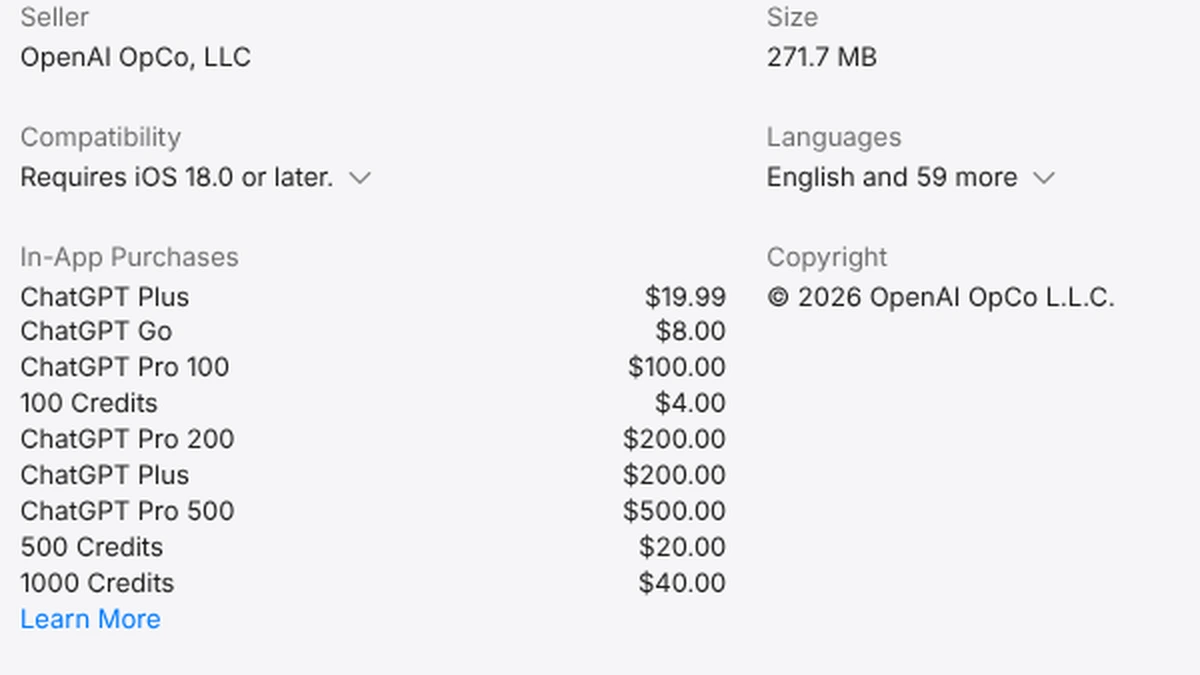
- 1ChatGPT Plus $19.99: the in-app price. OpenAI’s help center says $20 a month.
- 2ChatGPT Go $8.00: the cheapest paid plan. OpenAI says Go may include ads.
- 3Pro 100, Pro 200 and Pro 500: OpenAI’s help center names only Pro $100 and Pro $200; the pricing page mentions “3 usage tiers” without amounts. We could not confirm what Pro 500 includes. New sign-ups for Pro $200 have been temporarily paused since Sep 10, 2026[5][6].
- 4A second “ChatGPT Plus” at $200.00: Apple does not show the billing period, and OpenAI says Plus has no annual billing.
Screenshot of apps.apple.com (US App Store, ChatGPT), Oct 12, 2026, 11:13 UTC, taken by StudyTexter. Cropped, otherwise unedited; the numbered marks are ours[1].
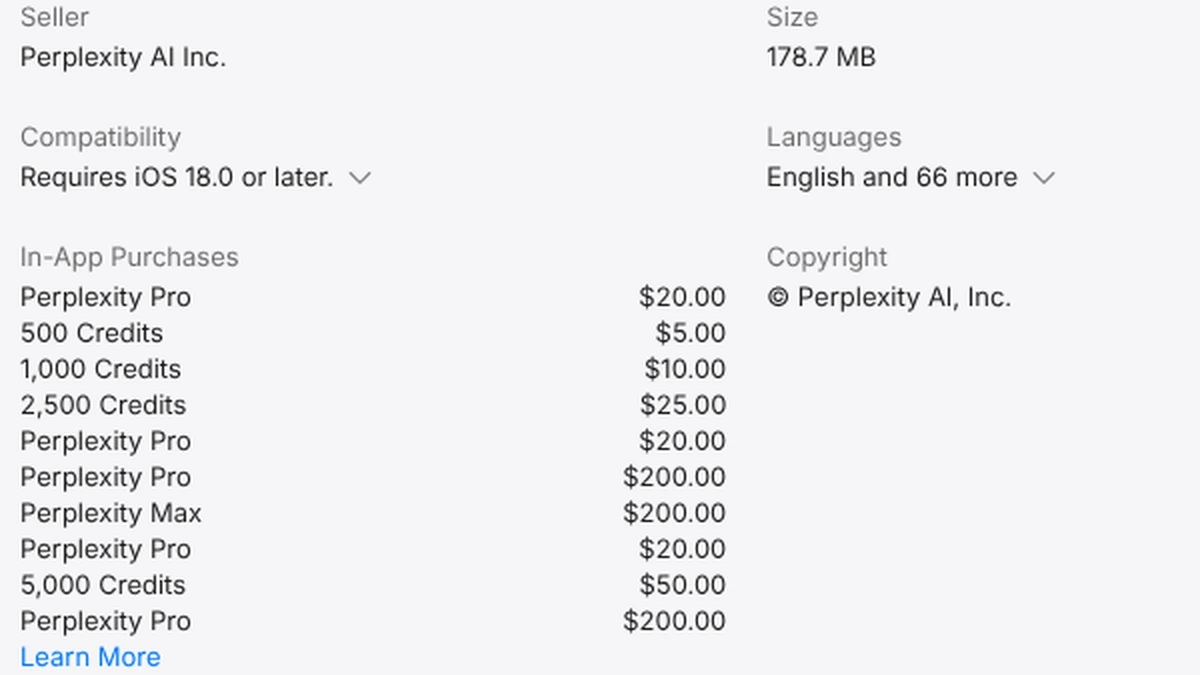
- 1Perplexity Pro $20.00: matches the $20 a month that Perplexity names on its blog.
- 2Perplexity Pro $200.00: a second Pro price. Apple does not show the billing period.
- 3Perplexity Max $200.00: the plan for heavy use.
- 4English and 66 more: the app languages. The ChatGPT app lists English and 59 more.
Screenshot of apps.apple.com (US App Store, Perplexity), Oct 12, 2026, 11:13 UTC, taken by StudyTexter. Cropped, otherwise unedited; the numbered marks are ours[2].
What students pay
- Perplexity Education Pro: $10 a month, which Perplexity calls 50% off Pro. It is for students and faculty. You can sign up with a personal or student email; your status is checked with SheerID. The help page does not list eligible countries[15].
- ChatGPT for U.S. students: 4 months of Plus for free if you study at an eligible U.S. college or university. Claim it by October 31, 2026 (offer as of October 12, 2026). You need a payment method, and Plus then renews at $20 a month[10]. Offers in other countries: see our overview of AI student discounts by country.
- Refunds at Perplexity: in the EU, the UK and Turkey you can cancel for a refund within 14 days, in South Korea and Brazil within 7 days. Everywhere else, a monthly plan can be refunded within 24 hours and an annual plan within 72 hours of purchase. Perplexity grants one refund per account. If you paid in the App Store, ask Apple at reportaproblem.apple.com[18].
Privacy: do they train on your chats?
By default, yes, both of them, for personal accounts. You can switch it off in both:
- ChatGPT: turn off “Improve the model for everyone” under Settings, Data controls. Temporary chats are not used for training. A thumbs up or down can still send that chat for training. ChatGPT Edu, Business and Enterprise are not used for training by default[11].
- Perplexity: “AI Data Retention” is on by default for Free, Pro and Max. Switch it off under Account settings, Preferences. The opt-out only covers data collected after you switch it off[17].
Our own side-by-side test
We have planned a test with the same prompts in both tools and a check of every reference. It needs accounts and manual work, so there are no results yet.
- Prompts. One prompt per subject (sociology, psychology, business, nursing, computer science): “I am writing a research paper on … Give me 10 academic references in APA 7 with DOI.”pending
- Setup. Free versions of ChatGPT and Perplexity, new chats, same day, screen recording. No settings changed.pending
- Check. Every reference: does it exist (DOI, Crossref, Google Scholar), are author, year and journal right, does the source support the sentence it is used for?pending
- Score. Share of correct, partly correct and made-up references per tool, with the full list.pending
Pending: this test needs accounts and has to be done by hand. We will add results with the date. Until then, this page makes no claim based on our own measurements.
When Perplexity is the better choice, and when ChatGPT is
Choose Perplexity if …
- you need current information, such as news or statistics, with the link to check
- you want a source next to every answer, so you can open it straight away
- you are a verified student and want a paid plan for $10 a month
- you want models from several AI companies in one subscription (Pro)
Choose ChatGPT if …
- you want a topic explained step by step or want to practice for an exam (study mode is free)
- you want to work with your own notes, files or data
- you want the cheapest paid plan in the US (Go, $8 a month) or study at a U.S. college or university with the free Plus offer
- the app’s age rating matters (13+ instead of 18+)
Many students use both. Neither replaces reading the sources yourself.
For the paper itself: StudyTexter
A research paper or thesis needs a topic, a research question, checked sources and citations your advisor can follow. StudyTexter is built for that one task, so for quick questions or news, ChatGPT and Perplexity are the better tools.
| Feature | ChatGPT or Perplexity | |
|---|---|---|
| Current news and web sources | yes, Perplexity especially | news search is not part of the 12 steps |
| Reference list for your paper | possible, but wrong or made-up references in every study above | 479M+ sources; you accept or reject each one |
| Page number for each citation | not mentioned on the vendor pages we read | yes, in the Evidence View |
| Plagiarism and AI check | not mentioned on the vendor pages we read | included |
| Price model | monthly subscription, free plan | one-time from $79, free up to your proposal draft |
StudyTexter works in 12 steps. Steps 1 to 5 are free and end with your proposal draft: topic, problem statement, research question and outline. From step 6, the literature search, you need a package, paid once, from $79 for up to 20 pages. You stay the author and revise the draft yourself.
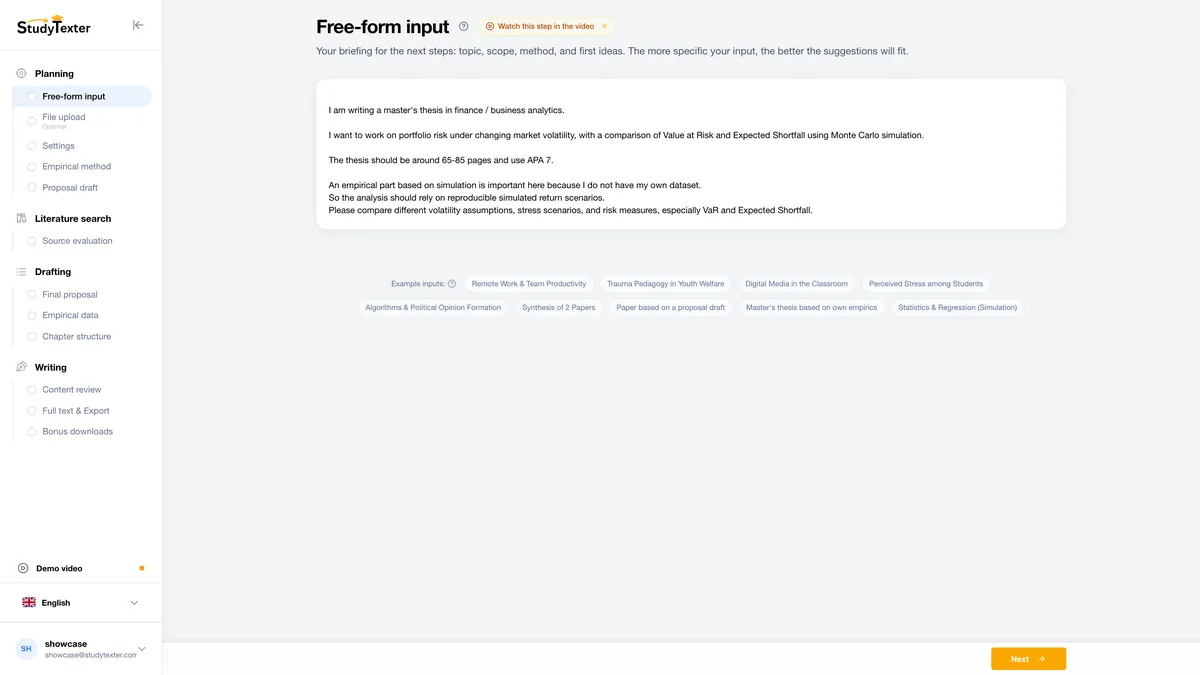
Topic in your words
Describe your topic in your own words. One sentence is enough to start.
Perplexity vs ChatGPT: FAQ
Is Perplexity better than ChatGPT for research?
For finding current sources on the web, yes, in the studies we found. In a 2025 study by the EBU and BBC, 15% of answers from free Perplexity had significant sourcing problems, compared with 24% for free ChatGPT. For reference lists on academic topics, neither tool wins: the studies are split 2 to 2. Check every source before you cite it.
Is Perplexity more accurate than ChatGPT?
It depends on the task. With news questions, Perplexity made fewer errors in two studies (EBU/BBC and Tow Center, 2025). For academic references, the studies are split 2 to 2. No study found either tool free of errors.
Does Perplexity use ChatGPT?
Perplexity is a separate product from Perplexity AI, Inc. With Pro, you can choose models from other companies; in October 2026 the help center lists GPT-5.4, Gemini 3.1 Pro, Claude Sonnet 4.6 and Nemotron 3 Super.
Is there a student discount for ChatGPT or Perplexity?
Perplexity offers Education Pro for $10 a month to students and faculty after a SheerID check. Perplexity does not list eligible countries. OpenAI gives 4 months of ChatGPT Plus for free, but only to students at an eligible U.S. college or university, and you must claim it by October 31, 2026 (offer as of October 12, 2026). After that, it renews at $20 a month.
Can I cite ChatGPT or Perplexity in my paper?
Ask your advisor and check your university’s AI policy first. In general, cite the original source you checked yourself, not the chatbot answer. In all the studies we list, both tools produced references that were wrong or did not exist.
Method and disclosure
We read websites, terms and reviews ourselves, back every number with a source and access date, and only add test results once we have them. Found a mistake? We correct it with a date.
On Oct 12, 2026 we read the help and pricing pages of OpenAI and Perplexity, the US App Store listings of both apps, and seven studies that test both tools on sources or references. We read the full EBU/BBC report and the UNIR preprint; for the medical journals we read the abstracts with their conflict-of-interest statements. For each study, the table names who ran it and their possible interest. We included papers whose abstract or full text reports a result for both tools; a 2026 ENT study without a Perplexity value is not in the table.
We did not create accounts or use either tool for this page; our own test is pending. The pricing pages showed a security check, which we did not try to get around.
StudyTexter competes with both tools for some tasks, so every verdict here points to a source. This page contains no affiliate links, and we receive no money from OpenAI or Perplexity. If you find a mistake, tell us and we will correct it and date the change.
Changes: Oct 12, 2026 first version. Same day: refund rules completed, Pro 500 and the Pro $200 pause worded as OpenAI states them, shared data of two medical papers named, tables made readable on phones.
Sources
- US App Store: ChatGPT (OpenAI OpCo, LLC), section “In-App Purchases”Plus $19.99, Go $8.00, Pro 100 / 200 / 500, 4.8 from 11M ratings; screenshot Oct 12, 2026, 11:13 UTC · accessed Oct 12, 2026
- US App Store: Perplexity (Perplexity AI Inc.), section “In-App Purchases”Pro $20.00 and $200.00, Max $200.00, 4.8 from 514K ratings; screenshot Oct 12, 2026, 11:13 UTC · accessed Oct 12, 2026
- OpenAI Help Center: What is ChatGPT Plus?accessed Oct 12, 2026
- OpenAI: Introducing ChatGPT Go, now available worldwide (Jan 16, 2026)accessed Oct 12, 2026
- OpenAI Help Center: What is ChatGPT Pro?accessed Oct 12, 2026
- chatgpt.com/pricing (plan names and limits; amounts were not in the text we could load)Free: “Limited deep research”; Go: “This plan may include ads.” · accessed Oct 12, 2026
- OpenAI Help Center: ChatGPT Free Tier FAQaccessed Oct 12, 2026
- OpenAI Help Center: ChatGPT searchaccessed Oct 12, 2026
- OpenAI: Introducing study mode (Jul 29, 2025)accessed Oct 12, 2026
- OpenAI Help Center: Back to School offer for studentsaccessed Oct 12, 2026
- OpenAI Help Center: How your data is used to improve model performanceaccessed Oct 12, 2026
- Perplexity Help Center: Which Perplexity Subscription Plan is Right for You? (read via the public Intercom mirror)accessed Oct 12, 2026
- Perplexity Help Center: What is Perplexity Pro?accessed Oct 12, 2026
- Perplexity blog: Introducing Perplexity Max (Jul 2, 2025)accessed Oct 12, 2026
- Perplexity Help Center: What is Education Pro?accessed Oct 12, 2026
- Perplexity Help Center: How does Perplexity work?accessed Oct 12, 2026
- Perplexity Help Center: Data Collection at Perplexityaccessed Oct 12, 2026
- Perplexity Help Center: Refundsaccessed Oct 12, 2026
- University of Tennessee Libraries: Perplexity guide (updated Mar 28, 2025)Academic focus; “relatively few sources”, “some hallucinations” · accessed Oct 12, 2026
- EBU and BBC: News Integrity in AI Assistants (report, October 2025; public broadcasters)free versions, answers from May 24 to Jun 10, 2025; per-tool results on p. 9 and 20 · accessed Oct 12, 2026
- Tow Center for Digital Journalism, Columbia Journalism Review: AI Search Has A Citation Problem (Mar 6, 2025)accessed Oct 12, 2026
- Assessing the performance of 8 AI chatbots in bibliographic reference retrieval: Grok and DeepSeek outperform ChatGPT, but none are fully accurate, Universidad Internacional de La Rioja (preprint, arXiv, May 23, 2025)free versions, tests Feb 7 to 9, 2025, 50 references per chatbot; Figure 1 · accessed Oct 12, 2026
- Reference Hallucination Score for Medical Artificial Intelligence Chatbots: Development and Usability Study, JMIR Medical Informatics 12, e54345 (Jul 31, 2024)accessed Oct 12, 2026
- Reference Hallucination in AI-Assisted Academic Writing: A Comparative Analysis of ChatGPT, Gemini, and Perplexity in Rotator Cuff Literature, Indian Journal of Orthopaedics 60(8), 1949–1956 (May 11, 2026)accessed Oct 12, 2026
- Performance of large language models in interpreting evidence-based clinical guidelines for lumbar disc herniation with radiculopathy, European Spine Journal (online Jun 12, 2026)accessed Oct 12, 2026
- A reproducible statistical evaluation framework for large-sample assessment of AI-generated medical references: cross-platform application of the reference hallucination score, BMC Medical Research Methodology 26, 191 (Jun 19, 2026)accessed Oct 12, 2026
Read next
Brands and logos mentioned belong to their owners and are used for identification only. They are not affiliated with StudyTexter.